
I’ve Recently Noticed an Increasing Number of Posts About People Having Been Made Redundant on LinkedIn, and Then the Many How-to Find a Job Experiences. This is Mine…
This is clearly a distressing state of affairs – the reason I know this is that I was made redundant in November. I was fortunate to be granted 3 months of gardening leave to find another job. While this was better than nothing, it was rather daunting, as previous rounds of job hunting had taken anything between 11 months and three years to reach a successful conclusion, so I needed to answer the question of how to find a job after redundancy fast.
I thought that it might be helpful for people who find themselves in this situation if I share my experience of how to find a job after redundancy. Hopefully, this will provide some helpful suggestions to streamline the process, leading to a successful job application for anyone struggling to find a job.
Structure
Without the requirement to head into the office or remotely check in, for the first time in a while, I found that I was wholly responsible for my daily routine. While it would have been easier to have a daily lie-in, I decided the best way to answer how to find a job was to treat the process as if it were a full time job. I maintained a routine of starting work at 9ish, having a short lunch break and finishing between 5 and 6.
To start with, I broke down my time into a few key tasks:
- Identifying suitable roles
- Applying with customised CVs and covering letters
- Company research, category research and interview preparation
I blocked out a decent amount of time for each of these activities to ensure adequate focus for each one, so as not to lose momentum on any task by constant flitting.
I also decided to keep weekends sacred, so I could give myself a mental break from job hunting.
The benefits I found from this approach included:
- It forced me to be disciplined
- It gave me time to give my brain a break from the cycle of applications
- It made me feel like I had a plan which was going to help me reach my goals
I also kept track of my applications in an Excel spreadsheet. This not only enabled me to see the progress I was making, but it also helped to track things such as the salary I requested, how many days a week I was required in the office and the progress of my application. While it may feel somewhat depressing to log the reason your application went no further, sometimes it can be helpful. For example, I was told by an agency I wasn’t appropriate for a role because I had no client-facing experience. This was not true, but I had failed to accentuate it adequately in my CV, which is something I addressed in future applications.
You can’t expect to get everything right the first time, so it is important to learn from your mistakes and view them as part of how to find a job.
CV Customisation
Writing a new CV from scratch is time-consuming and hard work. It is much easier to use a generic CV and use the covering letter as a means of customising your application, but given how employers screen applications these days, this approach is not the best approach to how to find a job. I decided to resist this temptation and to go down a more challenging route of ensuring every CV was tailored to the role. Ultimately, I think that this approach is best practice for anyone asking how to find a job.
Doing this unassisted would take a lot of time, so I decided to get some help from AI.
This took a bit of getting used to – on my first attempt, the AI software completely ignored my experience and suggested a CV which reflected exactly what the job description required. Consequently, I had to quickly learn how to make AI work better for me:
- I gave it instructions detailing exactly what I wanted, e.g. suggest tweaks which will shift the dial, not wholesale changes, write in a human voice, avoiding buzzwords, and ensure all recommendations accurately reflect my experience
- I never used recommendations without thoroughly proofing first to ensure it sounded like my voice and that it wasn’t overstating my experience
- I used it to ensure that the vocabulary that I used reflected that of the job description throughout, e.g. my CV may have highlighted my experience of interdepartmental co-operation, but if the job description spoke about cross-functional working, AI would suggest this change and provide reasoning if asked.
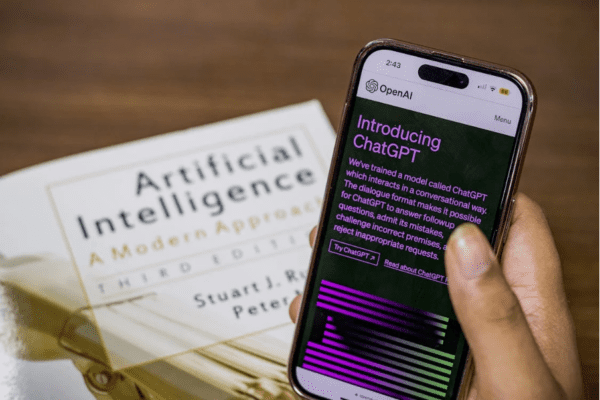
While using AI for job applications may feel like a bit of a cheat, there are a number of reasons that I think it is a critical resource for anyone wanting to know how to find a job:
- Recruiters use automated systems to sift through the CVs that they receive. AI will help candidates to identify the key words and ensure that they appear predominantly. AI is the best and easiest way for candidates to give the recruiter what they want
- You are still writing your CV and covering letter – all you are doing is using AI as a soundboard. You could pay a professional to provide you with feedback to customise your CV, but AI is likely to get you what you need more efficiently and involves less expense
- You have to ask AI the right questions – if you prompt AI, it will tell you when further changes won’t result in material gain, enabling you to allocate time to another task
Having sung the praises of AI, there are drawbacks to the tool you should be aware of:
- AI only knows what you tell it, so ensure that your instructions are clear. On occasion, AI will ignore your instructions, so you need to ensure that you double-check recommendations. If you call AI out on a mistake, it will re-evaluate and come up with a more accurate response, e.g. I was told that Pimms was one of Campari’s most important brands when it is currently owned by Diageo
- AI has a desire to match the job description as closely as possible with little regard for your experience. It also struggles to understand that if you have used a specific tool in a previous role, it does not follow that you had the same resource available in other roles
- AI loves using words connected by a dash, e.g. cross-functional. This is such a commonality that it could end up being a giveaway that you have used AI to assist in the creation of your CV. You may prefer to hide this and ignore the suggestion
I also used AI to assess whether my customised CV was a good fit for the role based on a score out of 10. While I found this useful in that it provided me with a clear indication on whether more work was required and helped to rebuild my confidence, which had naturally been somewhat knocked by the experience.
The only watch out here is that AI has a tendency to “blow smoke up your ass”. It is programmed to tell you that you are great and that you are right all the time. This can lead to a lack of critical thinking and future disappointment, e.g. I was told I was a 95% match for a role after putting in a lot of work honing my CV. It was crushing when I received the standard response “on this occasion, we have elected to proceed with other candidates” – possibly both the most common and most useless piece of feedback you are likely to receive.
Best Job Sites to Use to Identify Vacancies
There is a wide range of job sites available to help you identify roles that need to be filled. Depending on the industry that you operate in, there may be specialist publications that are good to use.
When using more general job sites, LinkedIn offers resources which provide regular updates and proactively send out new job alerts for search terms which you define. Alternative generalist sites include Indeed, Reed and Total Jobs.
As not all roles appear on these job sites, you can use AI to efficiently search the internet for relevant roles which are not advertised as widely.
Our Sticky Learning ® method is 7x more effective than 1-day training courses. Plus, we deliver a Chain of Evidence report proving your Return on Investment. Discover Soft Skills Training that changes behaviours long-term.

Interview Preparation
Once you’ve got over the first hurdle, the stakes immediately become higher, and there is increased pressure to perform. I certainly knew that I didn’t want to waste all the time and effort I’d put in to my application by failing to project the most positive image of myself at the interview.
Once again, I found that AI was my friend when considering this aspect of how to find a job. If you feed in the job description into the tool and ask for the most common questions to ask at an interview for this role, it can help come up with a list of questions you are most likely to face. In addition, it can help formulate a suggested response based on your experience, as long as you have given it this information. In a lot of cases, it is likely to recommend a structured response, e.g. STAR (situation, task, action, result). This rubbed me up the wrong way, as I felt it was effectively making my responses more robotic. Ultimately, it was useful to think about a responding to questions in a disciplined way – I have a tendency to waffle when I’m improvising, and this approach helped to minimise that.
There is a wealth of information about most companies available online so you can go into interviews well briefed on performance and key challenges. AI can help you to sift through material and quickly reach the salient points – definitely worth doing to get a quick overview. Again, you will have to be specific about your requirements – AI can tend to focus on markets it considers to be most important unless directed otherwise, e.g. USA.

While an interview will consist largely of you fielding questions, there is an expectation that you will want to learn more about the company and the role towards the end of the interview. I tend to fall back on some fairly stock questions relating to expectations over the first six months and what the rest of the recruitment process looks like. That was until I asked AI for some suggestions. While I wasn’t entirely sold on all of them, it provided some memorable recommendations. When I used them, the response was typically prefaced with “good question”. If you tend to blank at this stage of an interview, these kinds of suggestions could be invaluable to you and help to elevate how your candidacy is viewed.
Dealing With Setbacks
Being made redundant is unlikely to do your confidence any favours. While I tried my best to kid myself that I was fine and that the situation had nothing to do with me, there was a nagging doubt in the back of my mind that I wasn’t good enough.
The first application that you make is statistically highly unlikely to be the one that lands you a job, so you have to be prepared for knock-backs.
When I received these, in some instances, the blows hit harder because of my experience with redundancy. When one piece of feedback suggested I “lacked confidence”, it affected me disproportionately, especially as I felt that it was a role I felt I could have done with my eyes closed.

Ultimately, the optimal way to handle setbacks is something that will be unique to you. My approach was to try not to be too hard on myself and to respond to a setback by forcing myself to submit more applications. Ultimately, it is a numbers game – the more you get yourself out there, the more likely it is that you will find the role that is the right fit for you.
A Word on Recruitment Consultants
A good recruitment consultant is a fantastic asset to anyone faced with the question of how to find a job. I’ve worked with some who are exceptional, helping prepare you for interviews and acting like a cheerleader for your career. On the flip-side, you have some who fail to provide any kind of response at all to applications, leaving you wondering why you bothered in the first place.

So, is it worth using a recruiter? If you or one of your connections has a good contact in your industry, this is a valuable resource you should harness. If not, you could be better off applying directly to your prospective employer, so they aren’t liable for the fees that come with recruitment consultants’ involvement.
A Silver Lining
Somebody, who should remain nameless, asked me if there was anything good that came from being made redundant. I contend that there is absolutely nothing good about being made redundant while you are struggling with how to find a job.
However, when you get to the endgame, there are some advantages:
Being immediately available to work is not always an advantage, but if a company needs someone ASAP, it can help to make you look more attractive than a similarly experienced candidate who has to work a notice period. You may find it helpful to gently remind your prospective employer of this to tip the scales in your favour.
Final Thoughts
Being made redundant sucks. It throws a spanner in the works of best laid career plans and can have a detrimental impact on how an individual perceives themselves professionally.
Struggling to find a job will test the mettle of even the most positive individuals. It is incredibly hard to focus on how to find a job in a short space of time, especially when the situation is sprung on you unexpectedly. However, it is possible, and no matter how long you have been looking, there is a role out there somewhere waiting for you to fill it.
To recap, here are the things that I feel are most important when addressing how to find a job after redundancy:
- A positive mental attitude is the hardest thing in the world after experiencing redundancy, so celebrate the small victories and build on them until you reach the big one
- Utilise the resources you have available to maximise the impact of your applications. AI, the right recruitment consultant and Linked In Premium can give your application an edge
- Take a chance – a role might not look perfect for you, but if it has potential, go for it wholeheartedly to give yourself the best possible chance of success
To those who have had the misfortune of being made redundant, I feel your pain and wish you the best of luck in your search for a new role. I hope that the account of my experience has provided some useful suggestions regarding how to find a job and helps you to get your career back on track.