
Understanding the Five Broad Dimensions of Personality: An Introduction
Personality traits are the qualities that shape how people think, feel, and act. They affect how we deal with others, make choices, and respond to daily life.
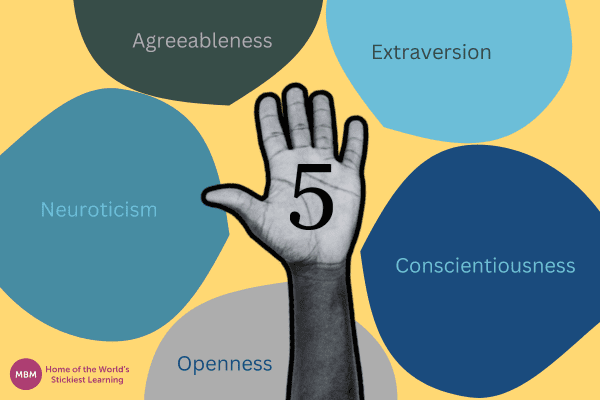
One of the best-known models of personality is the Big 5 Personality Traits. It is also called the Five-Factor Model.
The Big 5 personality traits are:
- Openness
- Conscientiousness
- Extraversion
- Agreeableness
- Neuroticism
In this article, we will look at each trait in a clear and simple way. We will also explain where the model came from, how these traits are measured, and how they can be used in real life.
A Brief History of the Big Five Personality Types
The Five-Factor Model became widely accepted in the 1980s. It is now one of the most trusted models of personality.
The Big 5 personality traits were built by studying the words people use to describe themselves and others. Researchers noticed that many of these words followed clear patterns.
Since then, many studies around the world have supported this model.
In the next sections, we will look at each trait in more detail. We will explain what it means, how it is measured, and how it can affect real life.
Related reading: Check out our ultimate guide on Myers Briggs.
The Five Personality Types: A Closer Look
The Big 5 personality traits, also known as the Five-Factor Model, are Openness, Conscientiousness, Extraversion, Agreeableness, and Neuroticism.
Each trait describes a key part of a person’s personality. These traits can help explain how people think, feel, and act in different situations.
In this section, we will look at each of the Big 5 personality traits in a simple and clear way.

1. Openness: Exploring New Ideas and Experiences
Openness is about how willing a person is to try new ideas and experiences. It also shows how open they are to different views.
People who score high in openness are often curious and creative. They may enjoy learning new things, asking questions, and exploring new ways of thinking. They may also have a strong imagination.
People who score low in openness often prefer familiar things. They may be more practical and like clear routines. They may also feel more comfortable with ideas they already know.
This trait can affect many parts of life. It can shape the hobbies people choose, the work they enjoy, and the way they solve problems. It can also show how willing someone is to accept change or try something new.
Our Sticky Learning ® method is 7x more effective than 1-day training courses. Plus, we deliver a Chain of Evidence report proving your Return on Investment. Discover Soft Skills Training that changes behaviours long-term.

Occupations Associated with High Openness:
-
- Artist
- Writer
- Research Scientist
- Travel Blogger
Occupations Associated with Low Openness:
- Accountant
- Office Manager
- Police Officer
- Financial Analyst
2. Conscientiousness: Being Organised and Responsible
Conscientiousness is about how organised and responsible a person is. It also shows how well they can stay focused and manage tasks.
People who score high in conscientiousness are often reliable and organised. They like to plan ahead, set goals, and finish what they start. Others may see them as dependable and careful.
People who score low in conscientiousness may be more impulsive. They may find it harder to stay organised or follow a plan. They may also prefer to act in the moment rather than prepare in advance.
Occupations Associated with High Conscientiousness:
- Project Manager
- Accountant
- Surgeon
- Librarian
Occupations Associated with Low Conscientiousness:
- Actor/Actress
- Artist
- Chef
- Salesperson
3. Extraversion: Being Outgoing and Social
Extraversion is about how much a person enjoys being around others. It also shows how active, confident, and outgoing they are in social settings.
People who score high in extraversion are often friendly and talkative. They enjoy meeting people and may feel energised in groups. They may also be confident when they speak or share their ideas.
People who score low in extraversion may be quieter or more reserved. They may enjoy time alone or prefer smaller groups. This does not mean they dislike people. It simply means they may need more quiet time to feel recharged.
Occupations Associated with High Extraversion:
- Sales Representative
- Event Planner
- Teacher
- Public Relations Specialist
Occupations Associated with Low Extraversion:
- Data Analyst
- Computer Programmer
- Librarian
- Writer
4. Agreeableness: Being Cooperative and Compassionate
Agreeableness is about how kind and caring a person is. It also shows how well they work with others.
People who score high in agreeableness are often warm, helpful, and easy to work with. They care about other people’s feelings. They may also try to keep the peace in their relationships.
People who score low in agreeableness may be more direct or competitive. They may focus more on their own goals. They may also be less empathetic and less likely to put other people’s needs first.
Occupations Associated with High Agreeableness:
- Counsellor
- Nurse
- Social Worker
- Human Resources Manager
Occupations Associated with Low Agreeableness:
- Lawyer
- Engineer
- Critic
- Research Scientist
5. Neuroticism: Experiencing Negative Emotions
Neuroticism is about how a person deals with stress and strong emotions.
People with high neuroticism may worry a lot. They may feel anxious, sad, or upset more often. They may also find stress harder to manage.
People with low neuroticism are often calmer. They may stay steady during stress. They may also bounce back faster after a hard time.
Occupations Associated with High Neuroticism:
- Social Worker
- Customer Service Representative
- Actor/Actress
- Emergency Room Nurse
Occupations Associated with Low Neuroticism:
- Pilot
- Police Officer
- Engineer
- Computer Programmer

Who Developed the Big 5 Personality Traits?
-
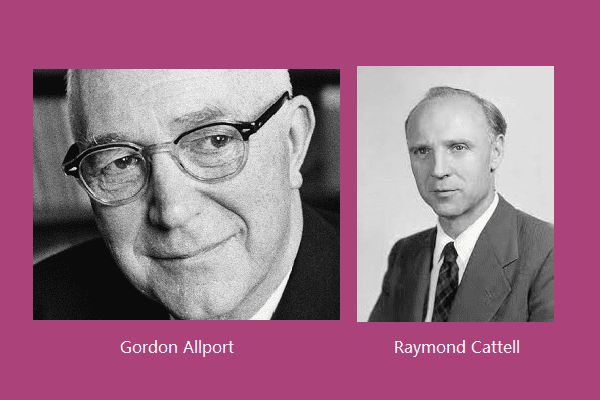
Gordon Allport: The Father of Trait Theory
One of the first psychologists to study personality traits was Gordon Allport.
Allport is often called the father of trait theory. He helped create one of the first clear models of personality traits. His work also helped shape later models, including the Big 5 personality traits.
Allport believed that traits are the basic parts of personality. He also believed that we can study traits by looking at the words people use to describe themselves and others.
-
Raymond Cattell: The Father of Factor Analysis
Another key psychologist was Raymond Cattell.
Cattell helped shape the study of personality. He created the 16 Personality Factors, also called the 16PF. This test measured different parts of a person’s personality.
The 16PF became one of the most used personality tests of the 20th century. His work also helped lead to later models, including the Big 5.
Utilising the Big 5 Personality Traits: A Practical Guide
The Big 5 personality traits can help you understand yourself and others better. They can also help with work, study, and relationships.
Here are some simple ways to use the Big 5 model in real life.
1. Self-Reflection and Personal Growth:
Think about your own Big 5 personality traits.
You can do this through self-reflection or a trusted personality test.
Look at your strengths. Also, look at the areas you want to improve.
Then, set small goals based on your traits. For example, if you want to be more organised, you can start by planning your week in advance.
2. Career Planning and Job Satisfaction:
Your personality can affect the type of work you enjoy. Think about how your traits match different jobs.
For example, people who are high in conscientiousness may enjoy organised roles. They may do well in jobs that need planning, detail, and focus.
It is also useful to think about the work culture. Some people enjoy busy and social workplaces. Others may prefer quiet and focused spaces.
3. Enhancing Interpersonal Relationships:
The Big 5 personality traits can also help you understand people around you. This includes friends, family, and people at work.
When you understand someone’s traits, you can communicate with them better. For example, some people like direct talks. Others need more time and support.
This can help you become more patient. It can also help you build stronger relationships.
4. Team Building in the Workplace:
The Big 5 personality traits can help leaders build better teams. A strong team often has a mix of traits. Different people bring different strengths.
For example, one person may be great at planning. Another may be full of new ideas. Another may be good at bringing people together.
Leaders can use this to give people the right tasks. It can also help reduce conflict, because people understand each other better.
5. Educational and Academic Success:
- Tailor study habits and learning styles to align with your dominant personality traits.
- Recognise the impact of openness to experience on creativity and adaptability in educational settings.
- Collaborate with peers who possess complementary traits for more effective group projects.
In the end, the Big 5 personality traits are a simple tool for daily life. It can help you grow, choose better paths, work well with others, and understand people in a clearer way.
How Can You Identify Your Big 5 Personality Traits?

The Big 5 personality traits can be recognised through various methods, such as self-report questionnaires, peer ratings, and behavioural observations.
Here, we will explore effective strategies for recognising and understanding your Big 5 personality traits.
#1. Self-report Questionnaires: Assessing Personality Through Self-reflection
Self-report questionnaires are the most common way to measure the Big 5 personality traits.
In these tests, people read simple statements about their behaviour. Then, they rate how much they agree or disagree.
For example, a statement about extraversion may be:
“I enjoy spending time with other people.”
A person would then choose how much this sounds like them.
These tools can be useful. They help show how people see their own personality.
#2. Peer Ratings: Gathering Insight From Others
Peer ratings are another way to measure the Big 5 personality traits.
Peers can include friends, family, co-workers, or managers. These people rate someone’s personality based on what they see.
Peer ratings can be useful because they give another point of view. They can also show blind spots.
For example, a person may think they are very outgoing. But their co-workers may see them as quiet in meetings. This can show a gap between how a person sees themselves and how others see them.
#3. Behavioural Observations: Examining Actions and Interactions
Behavioural observations are another way to measure the Big 5 personality traits.
In this method, someone watches how a person acts in real situations. For example, they may look at how confident or social a person is during a group task.
This can give a more direct view of someone’s behaviour. It does not depend only on what the person says about themselves.
However, this method can take a lot of time. It may also be hard to use in every setting.
Importance of the Big 5 Personality Traits
The Big 5 personality traits have been studied extensively and are important for a variety of outcomes in life, including career success, interpersonal relationships, and overall well-being.
In this section, we will take a closer look at why the Big 5 personality traits are so important.
1. Career Success: The Big 5 Personality Traits and Job Performance
People who score high in conscientiousness are often reliable and organised. They also tend to take responsibility for their work.
These skills are useful in many jobs. For example, they can help project managers, accountants, and executive assistants do their work well.
Openness can also be useful at work. People who score high in openness often enjoy new ideas and creative tasks.
This trait can be helpful in jobs such as graphic design, research, and creative writing.
2. Interpersonal Relationships: Understanding Others and Ourselves
The Big 5 personality traits can also help us understand our relationships.
When we know our own traits, we can see our strengths more clearly. We can also notice areas we may need to improve.
This can help us communicate better with others. It can also help us manage conflict in a calmer way.
For example, a person with low agreeableness may find it harder to see another person’s point of view. They can work on being more patient, kind, and open to others.
Over time, this can help build stronger relationships at home and at work.
3. Overall Well-Being: Relationship to Mental Health and Life Satisfaction
The Big 5 traits can also affect well-being.
They may influence mental health, life satisfaction, and how people feel in daily life.
For example, people who score high in extraversion may enjoy social time more. They may feel happier when they connect with others.
People who score high in agreeableness may also have strong relationships. They may find it easier to build trust and support with others.
For instance, an outgoing and kind person may make an effort to stay close to friends and family. These positive links can help them feel more satisfied with life.
Cultural Differences in the Expression of the Big 5 Personality Traits
How these types are expressed can vary depending on cultural norms and values.

So in this section, we will take a closer look at cultural differences in the expression of the Big 5 personality traits.
1. Individualism vs. Collectivism: Extraversion and Agreeableness
Culture can affect how people show their personality.
In some cultures, people are taught to be more direct and independent. These cultures may value confidence, speaking up, and making personal choices.
In other cultures, people may place more value on group harmony. They may focus more on respect, teamwork, and keeping peace in the group.
For example, someone from a group-focused culture may not speak in a very bold way. This does not mean they lack confidence. They may simply care more about keeping the group comfortable and united.
2. Power Distance: Conscientiousness and Neuroticism
Power distance means how much people accept unequal power in a culture.
In high power distance cultures, people may be more used to clear rules and authority. They may place more value on respect, obedience, and following the expected way of doing things.
This can be linked to conscientiousness. People may focus more on duty, order, and doing what is expected.
For example, in a workplace with high power distance, employees may follow rules closely. They may also wait for clear guidance from leaders before making decisions.
3. Uncertainty Avoidance: Openness to Experience
Uncertainty avoidance means how much people feel uneasy with change or unclear situations.
In cultures with high uncertainty avoidance, people may see new experiences as risky. They may prefer clear rules, familiar routines, and stable plans.
This can affect openness. People in these cultures may be less likely to try new things or accept sudden change.
For example, they may prefer trusted methods over new ideas. This does not mean they are not creative. It simply means they may feel more comfortable when things are clear and predictable.
The Potential Limitations of the Big 5 Personality Traits Model
When interpreting the findings, one should consider some potential limitations to the model. In this section, we will explore some of these limitations.
-
The Narrowness of the Model:
First, the Big 5 model only looks at five main parts of personality. This can be useful, but it may not show the full picture of a person. People are complex, and the five traits may not explain everything about how they think, feel, and act.
For example, the Big 5 does not directly measure traits like empathy, humour, or gratitude.
These traits can still be important. They may help explain how a person treats others, handles emotions, and responds in daily life.
-
Cultural Biases:
The Big 5 model was mainly created and tested in Western cultures. Because of this, it may not explain personality in the same way across all cultures. Some cultures may describe personality in different ways.
Language can also be a problem. Some languages may not have exact words for the Big 5 traits.
This can make the traits harder to measure in some countries. It may also affect how people understand and answer personality questions.
-
Self-report Bias:
The Big 5 model often uses self-report tests. This means people answer questions about their own personality. This can be useful, but it is not always perfect.
Some people may try to make themselves look better. Others may not fully understand their own traits.
People may also choose answers that seem more socially acceptable. This means their answers may show how they want to be seen, not how they really act.
-
Lack of Explanation for the Development of the 5 Big Personality Types:
The Big 5 model also has another limit. It can show what a person’s personality looks like now. But it does not fully explain how that personality formed.
It also does not explain how personality may change in the future.
For example, a person may become more confident, calm, or organised over time. This can happen through life events, work, relationships, or personal growth.
The Big 5 can describe these traits. But it does not always explain why they changed.
Applications of the Big 5 Personality Traits in Real Life
In this section, we will explore some of the applications of the Big 5 model in real life.

-
Education and Career Development
The Big 5 personality traits can help people understand their strengths and weak areas. This can be useful in school, work, and career planning.
For example, a high score in openness may show that a person is creative and flexible. They may enjoy new ideas and new ways of working. This can make them a good fit for careers in art, design, or technology.
Understanding your personality can also help you choose a better career path. It can help you find work that matches your values, interests, and natural strengths.
-
Relationship Building
The Big 5 personality traits can also help people build better relationships. When people understand their own traits, they can see how they act with others. They can also understand what they need from friends, family, or partners.
For example, a person who scores high in agreeableness may care a lot about peace and kindness. They may feel happiest in relationships where people are warm, fair, and supportive.
A person who scores high in extraversion may enjoy social time more. They may feel better when they spend time with outgoing and friendly people. In this way, the Big 5 can help people understand their needs. It can also help them choose healthier and more balanced relationships.
-
Personal Development
The Big 5 personality traits can also help people find areas for growth. For example, a person with low emotional stability may feel stressed or worried more often. They may benefit from simple stress tools, such as deep breathing, exercise, or better sleep habits.
A person with low extraversion may feel less comfortable in social settings. They may benefit from small social steps, such as joining a group, starting short talks, or meeting friends more often.
By knowing their weak areas, people can build better habits. This can help them feel more confident, balanced, and in control of their lives.
-
Clinical Settings
People who score high in neuroticism may feel more stress, worry, or low mood. They may have a higher risk of anxiety or depression. People who score low in conscientiousness may find it harder to control impulses. They may also struggle more with habits such as substance use.
When clinicians understand these traits, they can give more personal support. They can choose treatment plans that fit the person’s needs, habits, and challenges.
Conclusion
In conclusion, the Big 5 personality traits provide a comprehensive framework for understanding human personality. Each of the five traits represents a broad dimension of personality that captures important aspects of an individual’s thoughts, feelings, and behaviours.
By understanding the Big 5 personality traits, we can gain insight into our personality and the personalities of those around us. Additionally, we can use this knowledge to improve our personal relationships, career success, and overall well-being.
Updated: January 2024 by Farah Yasser Salama