
The Problem with Traditional Presentation Structures
Most presentation structures follow a standard routine: a title slide, a few bullet points, one or two graphs, and a polite thank you at the end. Did you know that audience attention typically drops sharply after just 10 minutes? Studies show that after 9 minutes and 59 seconds, people’s interest in presentations begins to plummet.
It works… until it doesn’t.
Sometimes, people seem quiet after you speak. Not because they are thinking, but because they didn’t feel anything. You followed the rules. You used the popular presentation structures. So why didn’t they work?
Here’s the reason: there is no one perfect way to structure a presentation. Great leaders know this. They don’t use the same formula every time. Instead, they choose a structure that fits the message and the moment.
In this article, I’ll walk you through how top leaders build their talks. I’ll show you different presentation structures, when to use them, and real examples from companies like Netflix and Patagonia. You’ll also get simple tips you can use in your next team meeting or pitch.
If you want people to care about your message, not just understand it, keep reading.
Why One Structure Doesn’t Work for Everything

Many people use the same presentation structure for every talk. They start with the problem. Then they explain the solution. Then they end with the next steps.
This can work in some situations. But not all.
Think about it. Would you talk to your boss the same way you talk to a new client? Or explain your project the same way to your team as you would to investors? Probably not. So why use the same slide flow every time?
Great leaders don’t just “follow a template.” They think about the room. Who is listening? What do they already know? What do they care about? Then they build a message that fits. They make sure their presentations are not boring.
Let’s take Satya Nadella, the CEO of Microsoft. In his early days as CEO, he had to shift the entire company’s mindset. But instead of starting with “what’s wrong,” he opened with a vision. He spoke about the possibility first, then the challenge, and finally the plan. That choice of order mattered. It gave people hope before he asked them to change.
That’s what presentation structures can do when they’re chosen well.
In the next section, I’ll show you four presentation structures that leaders use and when each one works best.
Four Powerful Structures Great Leaders Use and When to Use Them

There are many different presentation structures. But here are four that top leaders use often. Each one works best in a different setting. If you learn when to use them, your message will be clearer, stronger, and more likely to make an impact.
Let’s go through them one by one.
1. The Pyramid Principle

Best for: Sharing updates with senior leaders or explaining a clear decision.
The Pyramid Principle was made popular by consulting firms like McKinsey. It starts with the main idea first. Then it gives the supporting points underneath. This structure is clean and fast. You don’t make people wait for your conclusion; you lead with it.
McKinsey consultants are trained to write the answer first. If the client wants to know whether to enter a new market, the slide doesn’t start with background or risks. It begins with a bold statement, such as: “We recommend entering the French market in Q3.” Then, they explain why.
This presentation structure respects your audience’s time. It works well when your listeners are busy, sharp, and need the big picture up front.
Our Sticky Learning ® method is 7x more effective than 1-day training courses. Plus, we deliver a Chain of Evidence report proving your Return on Investment. Discover Soft Skills Training that changes behaviours long-term.

Try this:
Next time you’re writing a slide or email to your boss, start with the headline. Say what you recommend in one line. Then give the key points underneath. Don’t build up slowly; get to the point.
2. SCQA: Situation – Complication – Question – Answer

Best for: When your team is confused or misaligned.
SCQA is one of the presentation structures that help people understand why something matters. You start by describing the current situation. Then you add a complication: what’s going wrong, or what’s changing? This leads to a natural question: What should we do? Then you answer it.
Netflix’s team used this thinking during their shift to streaming. First, they explained the situation: People rent DVDs. Then the complication: Streaming is growing fast, and others are moving in. The question became: How do we stay ahead? The answer: Go all in on streaming before it’s too late.
This kind of style works well in moments of change or uncertainty. It pulls people into your message and helps them follow your logic.
Try this:
In your next team update, don’t just list tasks. Start by saying where things stand, what’s getting in the way, and what question you’re trying to solve. This brings clarity to the group and your thinking.
3. Monroe’s Motivated Sequence

Best for: Getting people to take action or accept change.
This structure comes from the world of public speaking. It’s great when you need people to feel something, not just understand your message. It goes like this:
- Get attention
- Show the problem
- Describe a better future
- Explain your solution
- Call them to act
- Real example:
Shopify’s CEO, Tobi Lütke, used a version of this when announcing layoffs. First, he explained the reality (rising costs, changing market). Then, he showed what could happen if they didn’t act. He shared a vision of a stronger, leaner company. Finally, he laid out the next steps and support for those leaving. It was clear, honest, and human.
This presentation structure is powerful when emotions are high or change is hard.
Try this:
Next time you’re asking your team to try something new, don’t just give the task. Start with a picture of what’s not working. Then show them what better could look like. End with a clear action and make sure they know you’re in it with them.
4. The Story Arc (Beginning – Middle – End)
Best for: Sharing vision, connecting with people, or pitching ideas.
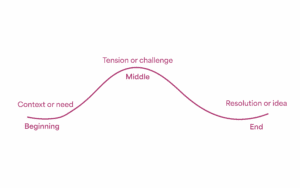
This is the oldest structure in the book and still one of the best. You tell a story. You start with a challenge or a need. Then you build tension. Finally, you resolve it with a decision, a product, or an idea.
People remember stories. They don’t remember bullet points.
In 2007, Steve Jobs launched the first iPhone. He didn’t start with specs. He started with a story. “Today, Apple is going to reinvent the phone.” He showed the old way of doing things. Then he built excitement. Finally, he revealed the iPhone as the solution to everything we didn’t know we needed.
That launch changed the tech world not just because of the phone, but because of how he told the story.
Try this:
You don’t need to be Steve Jobs. In your next team meeting, try opening with a short story, maybe something that happened to a customer, or a problem your team faced last month. Build a little tension. Then show how your idea helps solve it. You’ll be surprised how much more people pay attention.
Hybrid Structures: How the Best Presenters Mix Logic and Emotion

So far, we’ve looked at four strong presentation structures. Each one has a purpose. But in real life, most great communicators don’t follow just one. They mix and match.
They think of presentation structures like ingredients in a recipe. One part logic. One part emotion. One part story. And a clear message running through it all.
This is what makes a message feel both smart and human. It helps people trust you and act on what you’re saying.
Let’s look at how some top leaders and teams build these “hybrid” structures, and how you can do the same.
Example 1: Reed Hastings and the Netflix Culture Memo
In 2009, Reed Hastings, co-founder of Netflix, shared a 125-slide deck to explain the company’s culture. It had no flashy design and no fancy animations, just simple, clear thinking. Despite this, it became one of the most shared presentation structures in business history.
Why? It was a hybrid.
It started with storytelling: “We are a team, not a family.”
Then it used Pyramid-style points to explain values clearly.
It ended with a motivational close: “Freedom and responsibility.”
This structure made the ideas easy to follow and hard to forget.
Practical Tip: Create Your Mix
Say you’re rolling out a new internal process and want buy-in from your team. Here’s how you can mix different presentation structures to make your message stick:
- Start with a short story
Tell a real, recent problem your team faced. Keep it short and honest. Example: “Last quarter, we missed three deadlines because no one knew who owned what.”
- Move into SCQA format.
- Situation: “Here’s how we currently assign work.”
- Complication: “It’s confusing and leads to delays.”
- Question: “How can we fix this?”
- Answer: “With a shared project board and weekly check-ins.”
- Finish with a call to action, Monroe-style.e
“If we don’t fix this, we’ll keep missing deadlines. But if we do, we’ll finally get ahead of the chaos. Let’s start this on Monday.”
By combining several presentation structures: story, SCQA, and Monroe’s, you keep your team engaged and aligned. This is a style people can understand, remember, and act on.
Example 2: Apple’s Product Launches
Apple rarely sticks to just one structure. They use hybrid presentation structures in almost every launch event. They use a blend of :
- Narrative Arc to build excitement
- A pyramid structure to explain features clearly
- Monroe’s Sequence when calling people to upgrade or switch
When Steve Jobs introduced the iPhone, he didn’t just show the product; he also demonstrated its capabilities. He told a story about what phones used to be, made you feel the pain of clunky devices, and then showed you something new, all wrapped in clean logic.
Practical Tip: Try the “Soft Open – Hard Middle – Emotional Close”
This is one of the most flexible presentation structures you can use at work. It fits team updates, client meetings, and interviews.
- Soft Open (Story or Moment): Start with a small, real story or experience. Something the audience can relate to. This gets attention without being over the top.
- Hard Middle (Logic and Structure): Now switch into clear thinking. Use the Pyramid or SCQA here. Share the facts, the plan, the evidence.
- Emotional Close (Vision and Action): End with a bigger picture. Why does this matter? What’s at stake if we don’t do this? What’s possible if we do?
This three-part flow helps you connect first, then explain, then inspire.
Example 3: Internal Town Halls at Airbnb
Airbnb leaders use simple, hybrid presentation structures in their company town halls. These meetings don’t feel like long lectures. They feel open and human, and that’s by design.
They start with a win or a challenge, something real from the past week.
Then they break it down with logic, numbers, trends, and next steps.
They end by inviting input, which creates trust.
Practical Tip: Use Structure to Build Trust, Not Just Share Info
If you’re a manager or team lead, try using this hybrid approach in your next monthly check-in:
- Start with something real, a customer review, a recent mistake, or a team win.
- Use structure to explain what’s going well or what needs to change.
- Close by asking for feedback or ideas. Give your team space to respond.
This shows that you’re not just speaking at people, you’re speaking with them.
What Great Leaders Do Differently
We’ve all sat through presentations that looked fine but felt flat. The slides were clean. The speaker was clear. But nothing stuck.
Then, once in a while, we hear someone speak and think, Wow, that was different.
So what do these great leaders do that others don’t?
They know that presentation structures are more than just slide order. They use structure with purpose. They connect logic with emotion. And they speak in a way that feels clear, real, and human.
Let’s break it down with some real examples.
1- They Think Before They Build
Before they touch slides, great leaders ask themselves:
- Who is this for?
- What do they already believe?
- What do I want them to feel, think, or do?
They don’t start with PowerPoint. They start with a purpose. They shape their presentation structures around the goal and the audience.
Example: Barack Obama
When Obama gives a speech, he doesn’t jump into numbers or policies. He builds a message around what people already care about. In one talk about healthcare, he started with a story of a woman who worked two jobs but still couldn’t afford insulin. Then he built his presentation structures around that, not the other way around.
2- They Use Structure as a Tool, Not a Rule
Great leaders don’t follow structure just to “get it right.” They use presentation structures to make complex ideas simple, and they bend the rules when needed.
Example: Jacinda Ardern
As Prime Minister of New Zealand, Ardern gave daily COVID updates. She didn’t speak in heavy government language.
She used a clear flow:
- What we know
- What we don’t know
- What we’re doing about it
- What we need from you
It was simple, honest, and human. People felt informed, not confused.
3- They Put the Audience at the Centre
Weak presenters focus on what they want to say. Great ones build their presentation structures around what the audience needs to hear.. For your next big idea, write it out first. No slides. Just a one-pager with the problem, the plan, and the reason it matters. See how much sharper your thinking becomes.
Example: Jeff Bezos
At Amazon, Bezos banned PowerPoint in executive meetings. Instead, every meeting starts with a memo, written like a story. Everyone reads it silently for 6 minutes. Then they discuss.
Why? Because it forces people to think clearly and write clearly. It also puts the focus back on ideas, not on pretty slides.
4- They Mix Emotion With Logic
Facts matter. But feelings move people. Great leaders do both. They use presentation structures to guide the mind and stories to reach the heart. Before you show data or charts, ask yourself: Why does this matter to real people? Try opening with a short story or use a single sentence to bring the human side into the room.
Example: Tim Cook
At Apple, Cook once opened a product talk by sharing a letter from a blind customer who used the iPhone to read street signs. He could have jumped into screen size and battery life. But instead, he reminded everyone why the product mattered.
Then he gave the specs.
5- They Practice More Than You Think
Even when it looks natural, it’s not random. Most top presenters rehearse again and again, not to memorise, but to smooth out the flow, timing, and tone. Record yourself speaking once. Then listen back. You’ll spot gaps, extra words, or parts that feel too long. It only takes ten minutes, and it works.
Example: Oprah
Before big speeches, Oprah reportedly practices in full multiple times. Out loud. Standing up. She doesn’t just review her notes. She speaks to feel the rhythm and catch what sounds wrong.
Some Additional Structures
Beyond the core frameworks, here are six more storytelling structures that elite communicators use. Each one brings a unique way of framing your message and connecting with your audience.
Gustav Freytag’s Pyramid
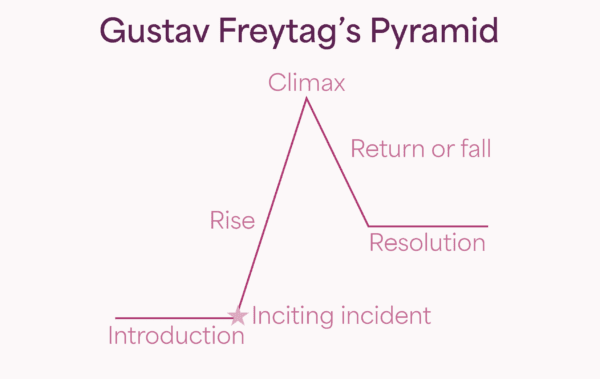
This structure follows a dramatic arc: it begins with an inciting incident, builds tension through rising action, reaches a climax, and then moves into falling action and resolution. It’s ideal when you want to take your audience on an emotional journey, showing both the challenges and the ultimate outcome. Leaders often use this when sharing personal stories to highlight resilience or transformation.
The Crystal Structure

The crystal starts with a strong central message and expands outward into multiple interconnected points, like facets of a gem. Each point reinforces the core idea from a different perspective. This framework works best when you need to present complex, multifaceted issues without losing clarity or focus. It allows your audience to see the whole picture while still remembering the central takeaway.
Dream–Nightmare–Action

This model begins by painting a vivid picture of a positive future, the dream. It then shifts to the nightmare, illustrating the obstacles or risks if nothing changes. Finally, it ends with a clear action plan that shows how to move from the nightmare to the dream. The contrast between hope and danger makes this structure highly persuasive, especially for leaders trying to inspire urgency and commitment.
The Customer Success Story

This framework puts the spotlight on a customer or client. It introduces who they are, outlines the challenge they faced, demonstrates the solution you provided, and finishes with the results they achieved. By anchoring your message in a real-world example, this approach builds credibility and trust. It’s particularly powerful for showing the tangible value of your product, service, or strategy.
The Pie-in-the-Face Story

This approach is built around vulnerability and growth. It starts by setting the scene, then highlights a mistake, failure, or embarrassing moment, the “pie-in-the-face.” From there, you reflect on what was learned and close with how the experience led to improvement or success. By sharing setbacks openly, you humanize yourself and foster a sense of authenticity that audiences respect and remember.
The Scientific Method

Borrowed from research, this structure frames your story around a problem, hypothesis, experiment, analysis, and conclusion. It is especially effective when you need to present data-driven insights or argue for an evidence-based decision. While not a traditional “story,” it creates a logical, unbiased flow that can make complex information easy to follow and highly credible.
How to Use This in Your Workplace

You’ve seen how great leaders build presentation structures that work. You’ve learned the structures they use and how they bend the rules when they need to.
Now let’s talk about you.
What do you do with all this?
Here’s a simple five-step process to help you put these presentation structures into action. You don’t need a design team or hours of free time. You just need to pause, plan, and build your presentation structures with more care.
Step 1: Know the Goal
Before anything else, ask:
What do I want them to do or feel after I speak?
- Do you want approval on a plan?
- Do you want people to understand a problem?
- Do you want action or support?
- Write your goal in one sentence. This is your anchor.
If you don’t know the goal, the audience won’t either.
Step 2: Know the Room
The best presentation structures start with empathy. Ask yourself:
- What do they already know?
- What might they resist or worry about?
- What do they care about most?
This helps you choose the right tone and structure.
Tip: Talking to a stressed-out leadership team? Use Pyramid, get to the point. Talking to a team that’s unsure or afraid? Try Monroe’s sequence to build buy-in and motivation.
Step 3: Choose Your Structure (Or Mix Two)
Now that you have a goal and understand the audience, pick your structure.
Use this table as a quick guide:
| Your Goal | Best Structure |
|---|---|
| Share a decision | Pyramid |
| Align people in confusion | SCQA |
| Inspire action | Monroe’s Motivated Sequence |
| Build a connection or trust | Story Arc |
| All of the above? | Hybrid (story + logic + emotion) |
Remember, you don’t have to stick to just one. It’s okay to combine a story with logic or use emotion to close. The key is to match the message of your presentation structures to the moment.
Step 4: Build the Flow (Forget the Slides for Now)
Too many people jump straight into PowerPoint. Instead, open a blank document and write your message as if you were explaining it out loud to a smart friend. The strongest presentation structures are built on ideas, not slides.
Don’t worry about formatting or fonts. Focus on clarity.
Use this structure to draft your first version:
- A hook, a story, a quote, or a surprising fact
- The message or goal
- The logic that supports it (3 main points)
- Why this matters
- What needs to happen next
If it makes sense on paper, it will make sense on slides.
Step 5: Practice the Feeling, Not Just the Words
Before you deliver it, read it out loud. Twice. Stand up if you can. Make sure it sounds natural and not robotic.
Ask yourself:
- Where do I slow down?
- Where do I feel too rushed?
- Does it land the way I want?
Record yourself on your phone and listen back. It’s awkward, but it works. You’ll hear what needs to change in your presentation structures.
You don’t need to memorise. You just need to own the message.
Final Thoughts
Most people treat presentation structures like a checklist: make slides, speak clearly, and end on time. That’s the bare minimum.
But great communicators know better. They don’t just follow a format. They use presentation structures to think, connect with people, and get results.
So, before you build your next deck:
- Pause
- Think about your audience
- Choose the right structure on purpose
- Mix story with logic
- And speak like someone who cares
Because if you don’t feel your message, they won’t either.