
The Invisible Skill No One Teaches
Most people think an AI career coach helps you plan your next move. But if we’re being honest, your career is shaped long before any big plan.
Not during performance reviews. Not during big coaching sessions. It happens in small, everyday decisions.
- Do you speak up in that meeting or stay quiet?
- Do you apply for that role or wait another month?
- Do you ask for feedback or assume you’re doing fine?
These moments feel small. But over time, they decide everything. The problem is, no one really teaches you how to handle them.
We’re trained for our jobs. We learn the technical skills. We learn how to pass exams, deliver tasks, and hit targets. But when it comes to managing our own careers, most of us are guessing.
That’s where things start to shift.
We’re now seeing the rise of the AI career coach. Not as a replacement for real coaching, but as something that supports the moments in between. The quick decisions. The second guesses. The “should I or shouldn’t I” moments that happen every single week.
And honestly, I think this is where things get interesting. Because the real advantage today is not who gets the best advice once in a while, it’s who has consistent support when it actually matters.
In this article, we’ll look at the gap most professionals don’t even realise they have, what great leaders are doing differently, and how using an AI career coach can help turn everyday work into real career progress.
Why Traditional Coaching Still Matters (But Isn’t Enough Alone)
Let’s be clear from the start. Traditional Coaching works.
When it’s done well, it creates real change. It helps people see things they were missing. It challenges assumptions. It gives direction when things feel unclear. An AI career coach doesn’t replace that. It supports it.
That’s why companies still invest heavily in coaching. According to the International Coaching Federation, over 70% of individuals who receive coaching report improved work performance and communication skills. Many also report higher confidence and better decision-making.
So this isn’t a story about coaching being outdated. It’s the opposite. It’s about how coaching and an AI career coach can work together.
Coaching provides three things that are hard to replace:
- Clarity: understanding where you are and where you’re going
- Perspective: seeing blind spots you can’t catch alone
- Challenge: being pushed beyond your comfort zone
And when those three come together, the impact is real. The role of an AI career coach is not to replace these, but to help you apply them consistently.
Where the Gap Starts to Show
The issue isn’t what happens inside a coaching session. It’s what happens after.
Most coaching still happens:
- once a month
- once a quarter
- or around key moments like reviews or promotions
That structure made sense when careers moved more slowly. But that’s not how work looks today.
Decisions now happen all the time:
- You’re asked to lead something unexpectedly
- You consider switching roles, but delay it
- You get feedback and don’t act on it
This is exactly where an AI career coach becomes useful. It sits in those in-between moments, helping you think, decide, and act without waiting for the next conversation.
The Data Behind It
A study by Gallup found that employees who receive regular, meaningful feedback are 3.6 times more likely to be engaged at work.
Not yearly. Not occasionally.
Regularly.
An AI career coach helps solve this by bringing that frequency into everyday work. Instead of waiting for structured feedback, you have something you can use consistently.
Our Sticky Learning ® method is 7x more effective than 1-day training courses. Plus, we deliver a Chain of Evidence report proving your Return on Investment. Discover Soft Skills Training that changes behaviours long-term.

What Great Leaders Have Noticed
This is something we’re starting to see more clearly in high-performing teams.
Leaders aren’t replacing coaching. They’re changing how it’s supported.
For example, at Microsoft, managers have shifted toward more continuous development conversations rather than relying only on formal reviews. Employees are encouraged to reflect more often and take ownership of their growth between structured check-ins.
This is where an AI career coach naturally fits. It supports that reflection, helps employees think through decisions, and keeps momentum going between conversations.
The goal is simple: Don’t let momentum drop between conversations because that’s where most people lose progress.
The Missing Middle: Where an AI Career Coach Actually Makes the Difference
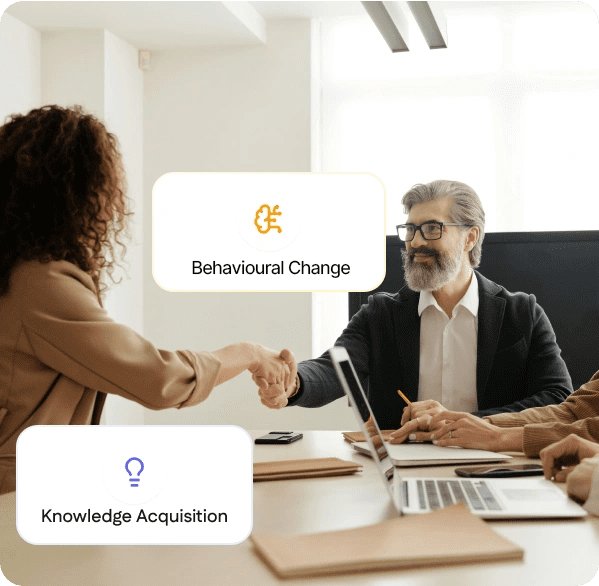
We like to think careers move forward in big moments. A coaching session, a promotion discussion, a major opportunity. But those moments are rare. What actually shapes a career happens in between.
After a strong coaching conversation, you usually leave with clarity. You know what to improve, what to aim for, and what steps would help you grow.
Then the real work starts again.
- You hesitate before speaking in a meeting.
- You delay applying for something.
- You hold back on asking for more responsibility.
None of these decisions feels big enough to matter. But they’re happening every week.
This is the missing middle. The space between knowing what to do and actually doing it. And for most people, there’s nothing supporting them there.
Why Even High Performers Get Stuck Here
This gap doesn’t just affect people who are struggling. It shows up clearly in high performers, too.
At Amazon, internal mobility patterns have shown that many employees delay making career moves despite being ready. They wait for more confidence, more certainty, or the “right time.”
By the time they act, they’ve often been ready for months.
That delay isn’t about skill. It’s about hesitation in small moments that no one is guiding.
Research from McKinsey & Company supports this. Consistent, small actions over time drive more impact than occasional big interventions. Growth doesn’t come from one decision. It comes from many small ones.
And most of those happen without structure.
Where an AI Career Coach Changes the Game
This is where an AI career coach fits in, and why it’s becoming more relevant. Not because it replaces coaching. But because it supports what happens in between.
An AI career coach helps you think in real time. Before a meeting. After feedback. When you’re unsure whether to act or wait.
It turns hesitation into reflection, and reflection into action. And that’s the shift.
Coaching gives direction.
Experience gives lessons.
But an AI career coach adds consistency.
It shows up in the exact moments where careers usually stall. And over time, those small moments are what move everything forward.
What Great Leaders Are Doing Differently (And How You Can Apply It)

If you look closely at high-performing teams, the difference isn’t that they have better people. It’s that they’ve changed how career growth actually happens day to day.
They’re not waiting for annual reviews. They’re not relying only on formal coaching sessions.
They’ve redesigned the in-between moments.
Here’s what that looks like in practice.
1. They Turn 1:1s Into Decision Reviews, Not Status Updates
At many companies, 1:1 meetings still revolve around updates. What got done, what’s next, what’s blocked.
But companies like Microsoft have deliberately shifted away from this. As part of their growth mindset culture, managers are trained to focus less on reporting and more on how employees are thinking and making decisions.
In practice, that looks very different.
Instead of spending the meeting reviewing tasks, managers focus on moments where employees had to make a choice.
For example:
Think about the moments that usually get overlooked.
- An employee has an idea in a meeting but decides not to share it.
- Someone sees an internal role they’re interested in, but waits instead of applying.
- A team member disagrees with a decision but chooses not to push back.
Individually, these don’t seem like big deals. They rarely get discussed. But over time, they shape how someone shows up at work and whether they move forward or stay where they are.
Great managers don’t ignore these moments. They bring them into the conversation.
Instead of focusing only on outcomes, they ask:
-
What made you hesitate there?
-
What were you weighing in that moment?
-
What would you do differently if it came up again?
Over time, this does something more powerful than tracking performance.
It builds decision awareness, which is what actually drives long-term career growth.
What this means for you:
Instead of waiting for feedback on outcomes, start bringing decisions into the conversation.
Before your next 1:1, note one moment where you held back. Use an AI career coach to reflect on it quickly, then discuss it. That’s where real growth happens.
2. They Expect People to Think Before the Conversation Starts
One of the biggest differences in high-performing teams is this: people don’t show up to career conversations unprepared.
At Google, career development is supported by structured frameworks and internal tools that encourage employees to reflect before speaking to their managers. This includes thinking through strengths, gaps, and possible next roles ahead of time.
So instead of a manager asking, “What do you want to do next?” and getting a vague answer, the employee comes in with a point of view.
For example:
“I think I’m ready to move toward a product role because I’ve been doing X and Y.”
“I realised I avoid speaking in large meetings, and that’s holding me back.”
“Here are two directions I’m considering, and I’m not sure which fits better.”
This completely changes the quality of the conversation.
It becomes:
- faster
- more focused
- more challenging
Managers can now respond with insight instead of trying to extract clarity from scratch.
At Google, this approach is part of a broader emphasis on employee ownership of development, rather than passive participation in feedback cycles.
What this means for you:
Don’t walk into career conversations thinking your manager will figure it out with you.
Take 10 minutes before:
- What do I want next?
- What’s actually holding me back?
- What decision am I stuck on?
If you’re unsure, an AI career coach can help you structure your thinking quickly so you don’t start from zero.
3. They Turn Career Growth Into a Weekly Habit
In most workplaces, career growth is treated like an event.
You think about it when:
- There’s a review
- a promotion cycle opens
- or a coaching session is scheduled
But in companies like Amazon, the expectation is different. Employees are encouraged to take ownership of their growth continuously, not just at fixed moments.
This shows up in how people think about their roles.
For example:
What this means for you:
Make career thinking a weekly habit, not a yearly one.
Once a week, ask yourself:
- What did I do that moved me forward?
- Where did I hesitate?
- What’s one small move I can make next week?
Using an AI career coach here helps you stay consistent without needing a full coaching session every time.
4. They Make Career Decisions Easier to Act On
One of the biggest hidden problems is not a lack of ambition. It’s friction.
People don’t act because:
- They’re unsure what the right move is
- They’re overthinking options
- They don’t have a clear next step
At LinkedIn, internal career tools and mobility frameworks are designed to make this easier. Employees can explore potential next roles, understand the exact skills required, follow personalized learning paths, and even get alerts for internal opportunities. This gives them a clear, structured view of where they can go and how to get there.
This reduces hesitation.
Instead of thinking:
“I don’t know what to do next.”
It becomes:
“I have two options, and I need to choose one.”
When decisions feel clearer, action happens faster.
What this means for you:
Don’t wait for full clarity.
Break decisions down:
- not “change my career.”
- But “explore one path this week.”
An AI career coach can help you map options quickly, compare paths, and identify your next step without overcomplicating it.
5. They Combine Coaching With Daily Support
This is the biggest shift, and the one that ties everything together.
Great leaders are not replacing coaching. They are extending it into everyday work.
Coaching still provides:
- deep insight
- perspective
- challenge
But they recognise that most career decisions don’t happen in those sessions.
They happen:
- in meetings
- after feedback
- in moments of hesitation
So instead of leaving those moments unsupported, they introduce systems and tools that help employees think in real time.
This is where an AI career coach becomes powerful. Not because it replaces human coaching. But it fills the gap between sessions.
It helps you:
- process decisions quickly
- reflect after key moments
- Stay consistent in how you think about your career
And over time, that consistency is what creates real progress.
The Shift: From Career Advice to Career Systems
For years, career growth has been built around advice. You get guidance in a meeting, maybe a coaching session, maybe feedback after a project, and then you’re expected to apply it on your own. Sometimes you do, but most of the time, life gets in the way. The issue isn’t the advice itself. It’s what happens after. Growth becomes inconsistent, built on occasional input, long gaps with no follow-up, and a lot of passive waiting for the “right moment.” It works for a few people, but for most, it leads to slow and unpredictable progress.
What strong teams are shifting toward now is something much more reliable. Instead of relying on occasional advice, they’re building simple systems around how people think and act every week, through continuous reflection, structured decision-making, and small, consistent adjustments.
This is where an AI career coach becomes genuinely useful. Not just as a source of advice, but as a tool that helps you repeat the process, think through decisions faster, reflect without overcomplicating it, and stay consistent. And that’s the real shift. From hoping advice will lead to change, to building a system that makes change happen regularly.
Where an AI Career Coach App Fits In
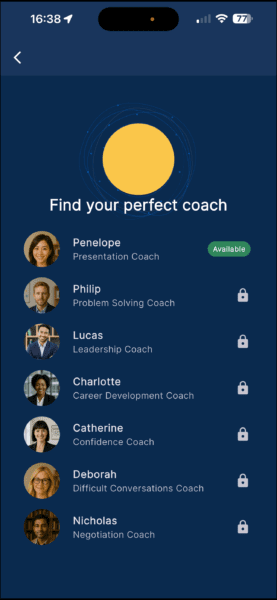
This is where an AI career coach app starts to make real sense.
Not as a replacement for coaching, but as something that supports what happens between coaching sessions. Because that’s where most career decisions actually happen.
An AI career coach app gives you a way to think in real time. Before a meeting, you can quickly structure your thoughts. When you’re unsure about the next step, you can explore options without overthinking. After a key moment, you can reflect while it’s still fresh instead of letting it pass.
In practice, it helps with:
- Structuring your thinking before decisions
- Exploring different career options quickly
- Reflecting on important moments
- Building a consistent habit of career thinking
That consistency is the real value. You’re no longer relying on occasional advice. You have something you can use anytime, which makes it much easier to turn insight into action.
And that’s why more teams are starting to introduce an AI career coach app into their workflows. Not to replace managers or coaches, but to extend their impact into everyday work.
Because in the end, they don’t replace the coach. They make the coaching stick.
A Practical Framework: The In-Between System

This is where everything becomes usable.
Instead of waiting for the next coaching session, you can use an AI career coach as a simple system you run throughout your week. No overthinking. No long planning. Just a repeatable process that keeps you moving.
Step 1: Before a Key Moment: Get Clear Fast
Before any situation that matters, take a minute.
Ask:
What am I trying to achieve here?
This could be a meeting, a conversation, or even sending a message.
Instead of going in unsure, use an AI career coach to quickly clarify your goal:
“What should I focus on in this meeting?”
“What’s the best way to position my idea?”
An AI career coach helps you structure your thinking in seconds, so you don’t default to hesitation.
Step 2: After the Moment: Capture What Happened
Right after, don’t just move on.
Ask:
What actually happened?
Most people skip this, which is why they repeat the same patterns.
Using an AI career coach, you can quickly reflect:
- What went well?
- What didn’t?
- What did I avoid?
This turns everyday situations into learning moments instead of missed opportunities.
Step 3: Identify the Gap: Don’t Guess, Be Specific
Now look at the difference between what you wanted and what happened.
Ask:
What would I do differently next time?
An AI career coach can help you break this down clearly:
- Was it confidence?
- Timing?
- Communication?
Instead of vague thoughts like “I should do better,” you get specific insight you can act on.
Step 4: One Adjustment: Keep It Small and Consistent
This is the most important step.
Don’t create a big plan. Just decide:
What is one small change I will make next time?
For example:
- Speak once in the next meeting
- Follow up within 24 hours
- Ask one direct question
Using an AI career coach, you can keep this simple and trackable, so it actually sticks.
Conclusion
Career growth doesn’t come from one big moment. It comes from what you do in the small ones.
Coaching gives you direction. But what really moves things forward is how consistently you act on it.
That’s where an AI career coach makes the difference. It helps you think, decide, and adjust in real time, not just once in a while.
And over time, that consistency is what turns small actions into real progress.