
Why Most Conflict Resolution Advice Fails in the Real World
Most workplace conflict does not look dramatic. There are no raised voices or slammed doors. It usually shows up in much quieter ways. A meeting where everyone agrees, yet nothing changes. A teammate who slowly stops sharing ideas. A decision that drags on because no one wants to challenge it.
What makes this worse is how common it is. Research shows that employees spend over two hours a week dealing with conflict at work. That’s more than 100 hours a year per person. And yet, conflict resolution is still treated like a secondary skill. Something soft. Something useful, but not essential. Many leaders believe good teams should feel calm and agreeable most of the time. I think this belief causes more damage than conflict itself.
The strongest leaders I have seen do not try to avoid conflict, and they do not let it explode either. They understand that conflict is already present in every team. The question is not whether it exists, but whether it is handled early, clearly, and on purpose. When it is ignored, it shows up later as resentment, silence, and slow execution. When it is handled well, it becomes a source of clarity and better decisions.
This is where most advice falls short. We are often told to communicate better, listen more, or be nicer in tough conversations. That advice sounds good, but it rarely works in real workplaces. Conflict is not just a people problem. It is often a system problem. It comes from unclear roles, mixed signals, and leaders who reward agreement more than honesty.
In this article, we will look at how great leaders handle conflict differently. Not in theory, but in practice. We will explore real companies and real leadership choices that show how conflict can be used instead of avoided. More importantly, we will focus on simple actions leaders can take to change how conflict shows up on their own teams.
Because the goal of conflict resolution is not peace. It is progress.
What Great Leaders Understand That Most Managers Miss
Most managers treat conflict like something to fix quickly. A tense meeting. A difficult conversation. A problem that needs to go away so the team can move on.
Great leaders see conflict in a very different way.
- They don’t rush to fix it.
- They slow down to understand it.
To them, conflict is not noise or drama. It is information. It shows where something is unclear, broken, or misaligned in the system. When conflict keeps coming back, they assume the issue is not the people. It is the way the work is set up.
You can see this clearly at Netflix, where disagreement is treated as part of the work, not a disruption. Leaders actively farm for dissent, especially on important decisions. Ideas are often shared in documents before meetings, and people are expected to comment, challenge, and point out risks early. When someone pushes back, leaders don’t try to shut it down or smooth it over. They treat it as data. Is the goal unclear? Is ownership missing? Is someone seeing something others are not? By pulling disagreement forward instead of letting it hide, Netflix fixes deeper problems in how work is designed, rather than managing the same tension again and again.
Over time, this mindset helps leaders fix root problems instead of managing the same tension again and again.
A Simple Way Great Leaders Read Conflict
Great leaders don’t overthink conflict. They sort it into one of three buckets. This helps them respond in the right way instead of reacting on instinct.
1. A signal problem
This happens when people don’t feel safe speaking up early. They hold back. Then disagreement comes out late, when emotions are higher. Leaders who recognise this focus on safety. They invite pushback early and show that honest input is welcome.
Our Sticky Learning ® method is 7x more effective than 1-day training courses. Plus, we deliver a Chain of Evidence report proving your Return on Investment. Discover Soft Skills Training that changes behaviours long-term.

2. A structural problem
This is one of the most common causes of conflict. Roles overlap. Decision rights are unclear. Teams are rewarded for different outcomes. No amount of “better communication” can fix this. Great leaders step in and clean up ownership, priorities, and who makes the final call.
3. A skill problem
Some people simply don’t know how to disagree well. They were never taught how to challenge ideas without attacking the person. Strong leaders notice this and coach it directly. They model how to disagree with respect and focus on the work, not the ego.
Why This Changes Everything
Most managers treat every conflict the same way. They try to calm things down. They focus on tone. They push for agreement.
Great leaders do something else. They diagnose first. Once they understand what kind of conflict they are dealing with, they respond with purpose.
This is why conflict on their teams feels different. It shows up earlier. It feels less personal. And instead of slowing people down, it often leads to better decisions.
When leaders stop treating conflict as a problem to avoid and start treating it as data to use, everything shifts.
How Leaders Design Teams That Can Handle Conflict

Some leaders only deal with conflict when it explodes. Great leaders try to prevent it from building up in the first place. They design their teams so disagreement feels normal, safe, and useful. When that happens, conflict shows up earlier and with less emotion. It becomes part of how the work gets better, not a threat to harmony.
What Pixar Gets Right About Conflict
A powerful example comes from Pixar’s famous Braintrust meetings.
At Pixar, films are reviewed in group sessions where honest criticism is expected. The goal of these meetings is not to protect feelings or show support. The goal is to improve the movie. Feedback is open, direct, and often challenging, but it stays focused on the work itself.
Ed Catmull, Pixar’s former president, has explained that the Braintrust has no authority to make decisions. It exists to point out problems, not to decide who is right. The director keeps ownership of the final call. This detail matters more than it sounds.
Why the Braintrust Works
This design removes many of the risks people usually feel during disagreement.
- Feedback is about the work, not the person
- Authority does not decide which idea wins
- Speaking up does not threaten anyone’s role or future
Because no one can overrule the director, disagreement feels safer. People are more honest because feedback is not tied to power or performance reviews. Over time, this creates trust and stronger ideas.
What Leaders Can Copy From This
Most teams don’t need a Braintrust, but they can borrow the principles behind it:
- Create spaces where junior voices go first, before senior opinions shape the room
- Separate idea critique from performance reviews, so disagreement feels safe
- Make it clear that challenging an idea is not the same as challenging a person
These are small choices, but they change how people behave.
My Honest Take
Many companies say they want honesty. Very few act like it.
People are told to speak up, but those who do are quietly labelled difficult. Others learn the unspoken rule fast. Be polite. Don’t push too hard. Keep concerns to yourself. This is how conflict goes underground and comes back later in worse ways.
Leaders who truly want healthy conflict design for it. They remove fear. They lower personal risk. And they make disagreement about improving the work, not protecting egos.
When teams are built this way, conflict doesn’t disappear. It becomes productive.
Conflict Resolution Is About Clarity, Not Comfort

One reason conflict lasts so long at work is simple. People avoid clarity. Being vague feels polite. It feels safe. But it creates confusion, not peace. When leaders soften messages or leave decisions unclear, conflict does not disappear. It just goes quiet and comes back later, often with more frustration attached.
Great leaders understand this. They know that comfort in the moment often leads to damage down the line. Clarity, even when it feels uncomfortable, saves time and trust in the long run.
What Intel Taught Leaders About Conflict
A clear example of this comes from Intel under former CEO Andy Grove. Grove believed that avoiding disagreement was dangerous for the business. He called his approach “constructive confrontation.”
At Intel, leaders were encouraged to be direct with each other, especially when the stakes were high. The goal was not to argue for the sake of it. The goal was to surface problems early, when they could still be fixed. Leaders were trained to challenge ideas openly, back their views with data, and accept pushback without taking it personally.
This mattered because clarity removed guessing games. People did not leave meetings wondering what was decided or who owned the next step. Conflict stayed focused on the issue, not the individuals involved.
What Great Leaders Do Differently
Leaders who handle conflict well don’t rely on vague signals or polite hints. They are clear, even when it feels awkward.
- They define decision rights early, so people know who owns the final call.
- They name tension when they see it, instead of hoping it goes away on its own.
- They separate disagreement from disrespect, making it safe to speak directly.
This does not make leaders harsh. It makes them fair and predictable.
What Leaders Can Do Right Away
You don’t need Intel’s scale to apply this thinking. Small actions make a big difference.
Before a meeting ends, clearly state who owns the decision and what happens next. Say what will not change, not just what is still open for discussion. If there is tension in the room, acknowledge it out loud and bring it back to the work.
My take is this. Many leaders confuse kindness with vagueness. In reality, unclear leadership creates more stress than clear disagreement ever will. People can handle a direct answer. What they struggle with is uncertainty.
When leaders choose clarity over comfort, conflict stops dragging on. And teams move forward faster.
Why Strong Leaders Always Fix Conflict Upstream

One of the biggest mistakes leaders make in conflict resolution is treating repeated conflict as a personal issue. If the same tension keeps coming back, strong leaders assume the problem is not the people. It is the system.
Effective conflict resolution is not about having the same hard conversation again and again. It is about stopping that conflict from happening in the first place. When leaders fail to do this, conflict resolution turns into constant firefighting instead of progress.
This is where great leaders think differently.
What Toyota Teaches Us About Conflict Resolution
A clear example comes from Toyota and its long-standing use of root-cause thinking. At Toyota, conflict resolution does not focus on who made the mistake. It focuses on what allowed the mistake or conflict to happen.The philosophy, often summarised by the phrase “go and see” (genchi genbutsu), assumes that failures in processes, not people, are the cause of problems.
When teams clash or problems repeat, leaders use tools like the Five Whys to trace the issue back to process and workflow. Instead of asking who failed, they ask why the system made failure likely. Was the handoff unclear? Were priorities competing? Was ownership missing?
This approach has been shown to reduce repeat errors and operational friction, which is one reason Toyota has consistently outperformed competitors on efficiency and quality metrics for decades. The key insight is simple. Conflict resolution works better when it is tied to process improvement, not personality correction.
What Strong Leaders Do After Conflict Is Resolved
Most conflict resolution efforts stop once the tension calms down. Strong leaders know that is too late.
They review conflict after it is resolved, not to reopen it, but to extract learning. They look for patterns instead of blame. Where did confusion show up? What decisions were unclear? What part of the workflow created friction?
By doing this, conflict resolution becomes preventative. Leaders change the system so the same conflict does not return in a different form next month.
What Leaders Can Do Right Away
You do not need Toyota’s scale to improve conflict resolution in your team. You need better follow-through.
After resolving a conflict, ask one clear question:
What allowed this conflict to happen?
Then act on the answer:
- Clarify roles so ownership is obvious
- Adjust incentives that push teams into conflict
- Fix workflows that create repeated tension
This is what effective conflict resolution looks like in practice. It reduces future conflict, saves time, and removes friction before it slows the team down.
A Practical Conflict Resolution Tool Leaders Can Use Before Difficult Conversations
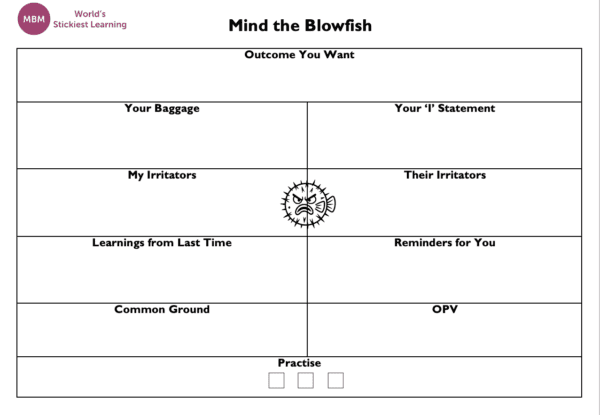
Very recently, while creating a difficult conversations training course, we built a simple preparation template to help leaders slow things down before conflict escalates. It is not about scripting the perfect conversation. It is about getting clear before emotions take over. This template can easily be shared as a one-page PDF and used before any high-stakes conversation at work.
What I like about this tool is that it treats conflict resolution as preparation, not performance. Instead of asking leaders to react better in the moment, it helps them think more clearly before the conversation even starts.
Here is how each part works and why it matters.
Outcome You Want
This is one of the most important parts of effective conflict resolution. Many conversations fail because people are unclear about the goal. Do you want a decision? Alignment? A behaviour change? Or simply understanding?
Writing down the outcome forces leaders to stop drifting. For example, instead of going in thinking “I need to talk to them,” the leader goes in knowing “By the end of this conversation, we need a clear agreement on deadlines.”
Clarity here prevents escalation later.
Your Baggage
This section is about honesty, not emotion. It asks leaders to acknowledge what they are carrying into the conversation. Past frustrations, assumptions, or previous conflicts often shape how we show up, even if we do not realise it. For example, you recognise that last month’s missed deadline still frustrates you, even though today’s conversation is about a different issue.
By naming this upfront, leaders reduce the risk of old emotions leaking into the conversation. This makes conflict resolution more grounded and less reactive.
Your ‘I’ Statement
Here, the template guides leaders to frame their message from their own perspective instead of making accusations. This keeps the conversation focused on impact rather than blame.
For example, “I feel unclear about priorities when deadlines change last minute” is very different from “You are always disorganised.” This shift keeps conflict resolution constructive and avoids triggering defensiveness.
My Irritators
This part asks leaders to reflect on what personally triggers them. Time pressure, tone, interruptions, silence. Everyone has them. For example, you know you get irritated when someone talks over you or avoids eye contact.
Knowing your irritators in advance helps you spot them in real time. Instead of reacting automatically, you can pause and refocus on the goal of the conflict resolution conversation.
Their Irritators
Conflict resolution improves dramatically when leaders consider the other person’s triggers as well. Do they shut down when put on the spot? Do they react badly to vague feedback? Do they need time to process?
For example, you know this person shuts down when given feedback in front of others. You choose a private setting instead of raising the issue in a group meeting.
This is not about walking on eggshells. It is about choosing an approach that increases the likelihood of resolution.
Learnings from Last Time
Repeated conflict often repeats for a reason. This section asks leaders to reflect on what has gone wrong before and what did not work.
For example, last time, the conversation ended with a vague agreement and no follow-up. This time, you plan to clearly confirm decisions and next steps before closing.
If past conversations ended in avoidance, escalation, or surface agreement, that pattern matters. Good conflict resolution builds on learning, not hope.
Reminders for You
This is a grounding section. It reminds leaders how they want to show up. Calm. Direct. Curious. Clear.
For example, you write: “Stay calm. Ask questions. Don’t rush to fix.” In the heat of conflict, it is easy to forget this. Writing it down beforehand makes it easier to stay anchored.
Common Ground
Conflict resolution does not mean agreement on everything. But it works best when people remember what they share. A goal. A team. A project outcome.
This section helps leaders reconnect the conversation to shared interests instead of opposing positions.
OPV
OPV stands for Other Person’s View. This is one of the strongest parts of the template. Leaders are asked to genuinely write out how the situation might look from the other side. You write out how the situation might look from their side. They may be dealing with unclear priorities from multiple stakeholders. Walking in with this perspective changes your questions and your tone.
This reduces false assumptions and helps leaders enter the conversation with curiosity rather than certainty.
Practise
Finally, the template encourages leaders to practise. Not memorise. Just walk through the key points once. This lowers anxiety and reduces the chance of emotional reactions during the conversation.

One of the most painful parts of conflict resolution is when tension spikes and people go into fight-or-flight mode. A useful lens I came across recently in a TEDx talk by communication expert Katelyn Carey is that emotional escalation isn’t just “bad behaviour”; it’s a biological response that makes conflict harder to solve if ignored. In her talk, Carey explains that when someone feels attacked or misunderstood, the brain can slip into a defensive state she calls the “blowfish effect”: suddenly, everything feels threatening, reasoning shuts down, and escalation becomes more likely.
This matters for conflict resolution because once someone hits that state, no smart argument will land. Telling people to calm down does not help. It usually makes things worse. What actually helps is showing that you see what is happening. Good leaders do this instinctively. They slow the moment down. They name what they are seeing without blame. Something as simple as, “I can see this is frustrating”, can lower the temperature enough for real conflict resolution to happen.