

Digging with the Wrong Shovel: Mastering the ‘Exploration’ Stage of Negotiation
Successful negotiation is not about clever haggling, over-the-top head-shaking, or even winning at all costs. It’s about listening, and exploring what’s possible, what they need, why they need it, what they do say, and what they don’t say.
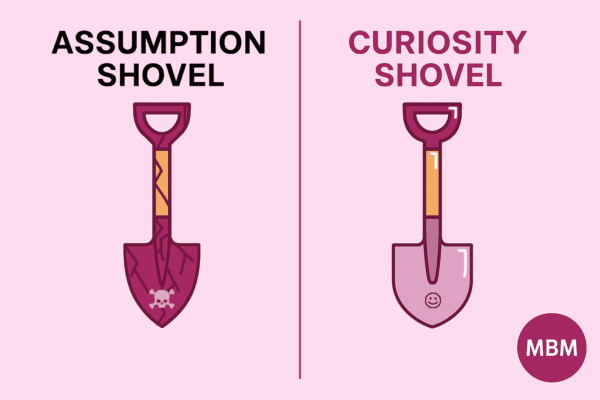
Exploration is the second stage of P.E.P.S.I, which is our mnemonic for the four stages of a successful negotiation. The exploration phase is so critical because it’s the phase where real insight is discovered, trust is built, and opportunities are revealed. However, there’s one problem: most negotiators enter the exploration phase with the wrong tool in hand. They think they’re exploring, but they’re actually digging with the assumption shovel, digging only where they think they need to dig.
The Assumption Shovel: A Tool You Don’t Know You’re Using
The assumption shovel is invisible. You don’t choose it consciously—it’s shaped by your experiences, biases, and expectations. It guides your questions, filters what you hear, and subtly steers your thinking.
You might assume your client is budget-constrained, so you dig into cost-saving ideas. You might believe they want a long-term deal, so you ask about timelines. These assumptions feel logical. They feel like preparation. But they’re actually dangerous because they limit what you might discover. They guide you to ask leading questions, interpret answers through a narrow lens, and miss what’s truly important. You walk away thinking you’ve explored, when really, you’ve just reinforced all the things you assumed about the situation before you started.
The worst part is that you probably don’t even realise you’re doing it. This is the trap of the assumption shovel: it feels like you’re being efficient, but you’re actually being blind. You’re digging in the wrong place, with the wrong tool, wondering why you’re not striking gold, or worse, thinking you already have.

Why It’s Dangerous:
The danger of the assumption shovel lies in how easily it masquerades as useful intuition. It feels like experience, like confidence, but in reality, it’s a filter that distorts the truth. The assumption shovel is easily implemented, unintentional even, but it’s this that makes it a downfall of even the most experienced negotiators in this critical phase of negotiation preparation. This is what makes the assumption shovel such a danger—it feels like a strategy, not a mistake.
When you explore with assumptions, or dig with the assumption shovel, you risk:
- Asking the wrong questions
- Missing key information
- Reinforcing your own biases
- Damaging trust with the other party
- Overlooking creative solutions
- Misjudging priorities and constraints
- Walking away from a value that is potentially easy to gain
In high-stakes negotiations, these risks can be costly. You might miss a hidden opportunity, misread a partner’s priorities, or walk away from a deal that could have worked—if only you’d dug with the right tool. The curiosity shovel.
Our Sticky Learning ® method is 7x more effective than 1-day training courses. Plus, we deliver a Chain of Evidence report proving your Return on Investment. Discover Soft Skills Training that changes behaviours long-term.

The Curiosity Shovel: Digging Where Truth Lives
The curiosity shovel is the tool you should be using. The tool that sets you up to find out something new, something you didn’t know before, that might just be useful in getting what you came for. The curiosity shovel positions you for success. It’s built on open-mindedness. It’s powered by genuine interest. And it’s designed to uncover what’s actually there—not what you expected to find.
Where the assumption shovel digs into familiar ground, the curiosity shovel digs into the unknown. It doesn’t reinforce your beliefs, it challenges them. It doesn’t narrow your focus, it widens it.
Using the curiosity shovel means asking questions that don’t have a predicted answer. It means listening not just for confirmation, but for contradiction. It means being willing to be wrong—and excited to be surprised.
In negotiation, this shift is transformative. Because when you dig with curiosity, you don’t just gather information—you build connection, uncover hidden value, and create space for real movement. The curiosity shovel is the tool of the expert negotiator. It’s not flashy. It’s not aggressive. But it’s powerful. Because it gets you to the truth, and the truth is where the leverage lives.
How to Switch Shovels
So, you’re ready to put down the assumption shovel and pick up the curiosity shovel. How do you do this?
It starts with awareness. Most negotiators don’t realise they’re digging with assumptions until the damage is done. The conversation feels flat, the insights are shallow, and the other party seems disengaged. The key is to catch yourself early and shift your approach deliberately. The assumptions you’ve already got are everything you need to switch shovels, we’re just going to flip them on themselves.
Here’s a practical framework to help negotiators switch shovels, even mid-dig:
1. Name Your Assumptions
Before the conversation begins, take five minutes to write down what you think you know. What are you assuming about the other party’s goals, fears, constraints, or decision-making process?
This step alone can be eye-opening. It forces you to separate fact from fiction. You might realise that half of what you’re basing your strategy on is guesswork. If this is the case, don’t be discouraged. Trust that you’re well on your way to digging with the curiosity shovel.
2. Turn Assumptions into Questions
Once you’ve named your assumptions, flip them into open-ended questions. This is where the shift from assumption to curiosity begins.
- Instead of assuming, ‘They’re under budget pressure,’ ask: ‘How are budget considerations influencing your decision?’.
- Instead of assuming, ‘They want a long-term deal,’ ask: ‘What kind of timeline are you working toward?’.
This reframing transforms your mindset from ‘I know’ to ‘I’m curious.’ It opens the door for genuine discovery.
Now, we’re digging with the assumption shovel.
3. Use Exploratory Listening
Exploring isn’t just about asking questions, it’s about how you listen. Exploratory listening means tuning in not just to what’s said, but to how it’s said. It’s about noticing tone, hesitation, repetition, and avoidance.
Are they dodging a topic? Are they unusually enthusiastic about something you didn’t expect? These are clues. Don’t gloss over them—dig into them.
The key to fuelling your discoveries with exploratory listening is open questions. Looking at what they’re not saying, and encouraging the most open answers, so you can gain as much information as possible. The better your questions, the less you’ll find you need to read between the lines.
4. Test and Reframe
As you gather information, gently test your assumptions. You’re not trying to trap the other party, you’re trying to learn.
Try phrases like:
- ‘It sounds like speed is more important than cost here. Is that right?’
- ‘I had assumed X was a priority, but it seems like Y might be more pressing. Can you help me understand that better?’
This kind of language shows humility. It invites correction. And it builds trust because you’re showing that you’re willing to be wrong and that you’re genuinely interested in a positive outcome for both parties—not just yourself.

A Real-World Example:
Let me share a story from one of my learners that perfectly illustrates the shift from assumption to curiosity. Switching shovels.
They were negotiating with a supplier and couldn’t understand why the supplier was refusing to lower prices. The learner assumed it was greed. That assumption shaped their entire approach. They pushed harder on cost, framed every proposal around savings, and grew increasingly frustrated. But then, during a coaching session, we unpacked the assumption. I asked them to switch shovels—to dig with curiosity instead. They went back and asked a simple question:
‘What’s driving your pricing decisions right now?’
The answer changed everything. The supplier revealed they were under pressure from a new compliance regulation that had increased their operational costs. Price wasn’t the issue, survival was.
Armed with that insight, the learner proposed a joint compliance solution that reduced costs for both sides. The deal closed quickly, and both parties walked away stronger. That’s the power of switching shovels.
And it’s not a one-off. I’ve seen this play out in sales negotiations, partnership discussions, internal stakeholder meetings—you name it. The moment a negotiator drops their assumptions and picks up curiosity, the conversation changes. It becomes more human, more honest, and far more productive.
Bonus Insight: The 5 Levels of Listening
The way in which we listen is a crucial part of exploration, the second phase of negotiation. Stephen Covey, author of ‘The 7 Habits of Highly Effective People’ , came up with the 5 Levels of Listening:
1. Ignoring — You don’t care/
2. Pretending — You’re faking it.
3. Selective Listening — You hear what you want to.
4. Attentive Listening — You hear their words.
5. Empathic Listening — You feel their world.
During the exploration process of your negotiation, listening at levels 4 & 5 is absolutely paramount. It’s important because it makes your client feel like they’re your whole world, which feeds into the one of Robert Cialdini’s 6 laws of persuasion – Liking. People who feel committed, are striving to build rapport and are actively listening are much more likely to satisfy their desired result. Attentive and empathic listening are also important because you will simply pick up on things you would not have seen without active listening.
More information = more potential for opportunity.
Empathic listening is key to digging with the curiosity shovel.

Final Thought: Choose Your Tool
From now on, every time you enter the exploration phase of a negotiation, ask yourself:
‘Which shovel am I digging with?’
The assumption shovel is easy to pick up. It feels familiar. It’s shaped by your experience, your confidence, your gut. But remember that it limits what you can learn. It narrows your field of vision, and it often leads you to dig in the wrong place. The curiosity shovel takes more effort. It requires humility. It demands openness. But it leads to deeper insight, stronger relationships, and better outcomes. Not just for one negotiation, but for the future of negotiations with your client.
So next time you prepare to explore, pause. Reflect. Choose your tool wisely.
Because when you dig with curiosity, you don’t just find answers. You strike gold.