
Is Business Coaching a Scam or the Smartest Investment You Can Make?
Let’s be honest. Some people still think business coaching is a joke. They hear the word “coach” and picture someone shouting motivational quotes or asking, “What’s holding you back?” in a dramatic voice. It sounds fluffy. Soft. Like something for people who can’t handle “real work.”
But here’s the twist: business coaching is one of the most practical tools a company can use. And it’s backed by data. The first time I heard a manager say, ‘I don’t need coaching, I’ve been doing this for years,’ I thought about athletes. Serena Williams has a coach. Tom Brady had a coach. Why shouldn’t leaders?
So, what is it?
Business coaching means helping people grow in how they lead, think, decide, and work with others. It can be one-on-one or with a team. It can be for someone just been promoted or someone running a whole department. The coach doesn’t give commands. They ask smart questions. They help people think, build confidence, and focus on what matters most.
And here’s the part that surprises people: it works.
A global study by the International Coaching Federation (ICF) found that 86% of companies said they made back their investment in coaching. Even more, 96% of people who had a coach said they’d do it again.
In other words, coaching isn’t just feel-good talk. It has a real return on investment. People make better decisions. Teams work better together. Leaders burn out less. That’s why companies like Google, Microsoft, and Deloitte all use coaching, not just for their problems, but for their best people.
Harvard Business Review also wrote that coaching helps leaders stay focused in fast-moving environments. It’s not about telling someone what to do. It’s about building the kind of mindset that can adapt, lead, and grow when things get messy.
Forbes put it even more clearly: “Great leaders don’t just wing it. They work on it.”
So no, coaching isn’t a scam. It’s not soft. It’s not something you try when everything is falling apart. Coaching is what you give your people when you want them to thrive, not just survive.
And now, with mobile business coaching apps bringing coaching to your phone, anyone can access it. Which raises a new question: what’s the best way to use it?
Let’s look at the top coaching apps people are using and what they’re getting right.
1. Marshall Goldsmith Coaching App: Simple Advice from a Big Name in Coaching

I downloaded the Marshall Goldsmith business Coaching app out of curiosity. It’s from one of the most famous executive coaches in the world, so I wanted to see what it offers.
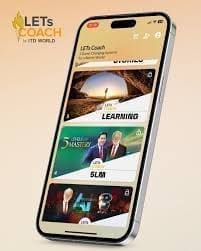
The app opens with a clean layout. On the main screen, there’s a “Thought of the Day.” These are short leadership tips, written clearly. One I saw said, “The only person you can change is yourself.” That’s classic Goldsmith. Straight to the point. The app doesn’t overwhelm you with features, but it does give you something to think about.
There’s also a “Daily Questions” section. This is where users can rate themselves on questions like, “Did I do my best to build positive relationships today?” or “Did I stay focused on my goals?” You score each one from 1 to 10. It’s a self-check, not something you share with others. It’s more about staying aware of your habits.
I only explored the free version. It gives you a weekly coaching tip, while the full version offers new ones every day. The tips are based on Goldsmith’s coaching style, which focuses on small daily changes that build better leadership over time.
When I checked the app store reviews, people seemed to agree on one thing. It’s simple, but helpful if you use it. One review on the App Store said, “I’ve been using this app for a few months and it’s helped me become more intentional with my time.” Another person on Google Play wrote, “It’s like a quiet coach in your pocket. Just wish it was more stable.”
There’s no AI in the app itself, but Marshall Goldsmith did launch something called “MarshallBot“, which uses AI to answer leadership questions. It’s not part of this app, though. It would be a good idea to bring that bot into the app in the future. It could make the tips more personal or help with answering leadership challenges in real time.
While the Marshall Goldsmith business coaching app offers daily reflections and self-assessment tools, it’s important to note that it doesn’t provide interactive coaching sessions. Coaching typically involves dynamic, two-way conversations that challenge and guide individuals through personalised feedback. This app focuses more on delivering motivational content and self-reflection prompts rather than engaging users in interactive coaching dialogues. It provides static content for self-reflection.
Pricing and Rating
At the time of writing, the Marshall Goldsmith business coaching app is free to download. You get weekly tips with the free version. For daily coaching content, there’s a one-time upgrade option inside the app, no subscription required.
-
App Store rating: 4.5 out of 5
-
Google Play rating: 4.2 out of 5
Drawbacks
-
The app focuses on delivering daily leadership tips and self-assessment questions, but lacks interactive coaching features.
-
Some users have reported stability issues, including app crashes and loading problems.
Our Sticky Learning ® method is 7x more effective than 1-day training courses. Plus, we deliver a Chain of Evidence report proving your Return on Investment. Discover Soft Skills Training that changes behaviours long-term.

2. BetterUp: A Personalised Coaching Experience for Professionals
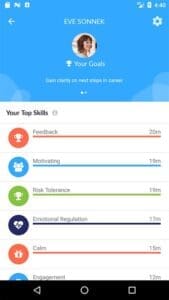
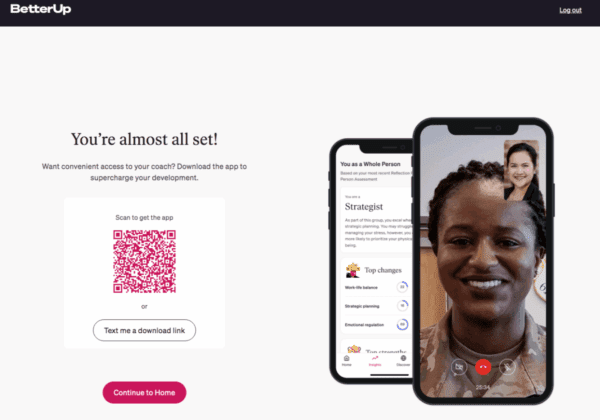
I explored the BetterUp business coaching app, a platform designed to provide personalised coaching for professionals. Upon opening the app, I was prompted to complete a brief assessment. This questionnaire aimed to understand my goals and preferences to match me with a suitable coach. The process was straightforward, and I was soon presented with a selection of coaches to choose from.
The app’s interface is user-friendly, featuring sections like “Explore,” “Browse,” and “Saved.” These sections offer a variety of resources, including articles, videos, and exercises focused on topics such as mental fitness, communication skills, and leadership development. The content is curated to support both personal and professional growth.
BetterUp has introduced an AI-driven coaching feature known as BetterUp Grow. This tool offers on-demand, personalised coaching experiences designed to help users navigate challenges and develop critical skills in real-time. According to BetterUp, early users have reported a 95% satisfaction rate with the AI coaching features and a 16% increase in confidence after using the service.
User feedback on the app is generally positive. Users praised the professionalism of the coaches and the quality of the sessions. One user mentioned, “I’ve been with BetterUp for over a year now, and I have no regrets. My coach has been incredible, helping me navigate challenging experiences in my career.”
However, some users have expressed concerns about the app’s pricing and flexibility. A Reddit user noted, “It is so overpriced and completely inflexible in the way that you have to pause. Cancelling will remove all credits you have.”
In summary, BetterUp offers a comprehensive coaching experience, combining human expertise with AI-driven tools. It’s particularly beneficial for professionals seeking structured support in their personal and career development. While the app has its drawbacks, such as pricing concerns, its personalised approach and quality resources make it a valuable tool for many.
Pricing and Rating
BetterUp offers coaching through company packages and individual plans. Pricing can vary a lot, but personal subscriptions usually range from $75 to $250 per session, depending on the coach and plan. Some companies cover the cost for employees.
-
App Store rating: 4.5 out of 5
- Google Play rating: 3.7 out of 5
Drawbacks:
- Some users find the AI-driven “Grow” feature to be repetitive and lacking depth.
- Concerns have been raised about the platform’s pricing and inflexibility in pausing or cancelling subscriptions.
3. Sounding Board: Coaching for the Real Challenges of Leadership
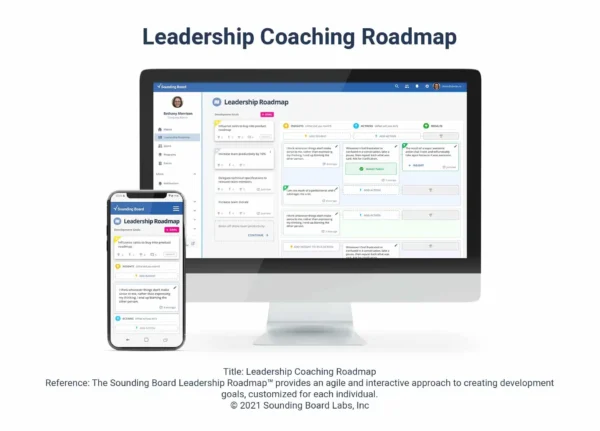
When I opened the Sounding Board business coaching app, the first thing I noticed was how focused it was on leadership in real work situations. It’s not just about personal growth. It’s about helping people lead better, especially when they’re managing teams, projects, or going through big changes at work.
The app starts by asking what kind of leader you are, where you want to grow, and what challenges you’re facing. It feels more like prepping for a strategy session than filling out a quiz. Based on your answers, the platform matches you with a professional coach. These coaches are focused on things like building influence, giving feedback, managing change, and improving team performance.
One thing that makes Sounding Board different is that it’s not just for individuals. Companies use it to coach people across the organisation. There’s also a feature where your manager can be part of the coaching plan. They help shape your goals and give input (if you allow it), so the coaching stays tied to your job and not just general life advice.
Another unique part? The app includes something called a “Leadership Journey Map.” It’s a visual timeline that tracks your growth through goals, sessions, and milestones. It shows your progress over time, not just what you’re working on right now. That felt more structured than other apps.
User reviews were mixed, but mostly positive. One person wrote, “This helped me go from surviving as a manager to enjoying leadership again.” Another said, “Great coaches, but I wish the scheduling system were more flexible.” That came up a few times: the calendar tools could use an update.
There’s no fancy AI chatbot, but Sounding Board isn’t built for that. It leans heavily on human connection. It’s for people who want thoughtful guidance from a real coach and who are working through specific leadership issues in their role.
If your company wants to invest in leadership coaching across teams, not just for top execs, this business coaching app could fit right in. It’s professional, grounded, and built with real workplace challenges in mind.
Pricing and Rating
Sounding Board is designed for businesses, not individuals. You can’t download and use it like a regular business coaching app. Companies pay for access and match employees with coaches through the platform. Pricing isn’t listed publicly, which usually means it’s part of a custom enterprise deal.
-
App Store rating: Not listed
-
Google Play rating: Not listed
That said, the platform gets great feedback on B2B review sites for its manager integration and structured leadership plans.
Drawbacks
-
The platform is tailored for organisational use, making it less accessible for individual users.
-
Some users have noted limitations in customisation options, such as adjusting icon sizes on communication boards.
4. CoachHub: Can Coaching Culture Scale Across a Whole Company?
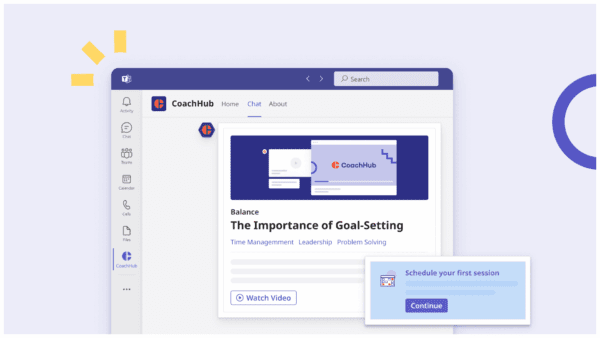
CoachHub feels like a business coaching app built for companies that are trying to take coaching seriously, not just for a few top leaders, but for hundreds or even thousands of employees. When I explored the app, it was clear this isn’t just a personal coaching app. It’s a system for creating what they call a “coaching culture”.
When you first sign up, you answer a series of questions about your role, goals, and leadership style. After that, the app suggests a few certified coaches based on your answers. Every coach comes with a profile, not just their background, but also their style, what they focus on, and how they like to work. One profile might be from a coach who specialises in helping first-time managers. Another had experience working with C-suite executives in tech. So, there’s a real range.
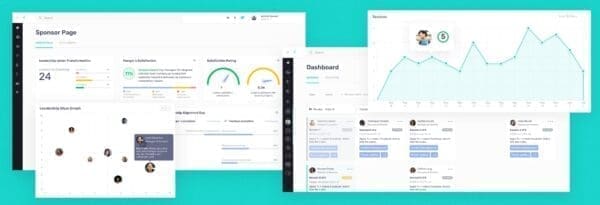
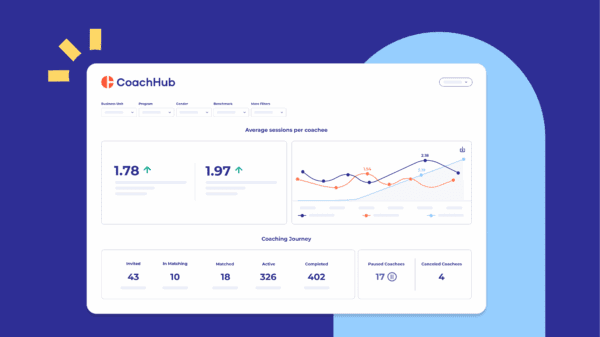
But what’s different about CoachHub is how it tries to make coaching feel measurable. There’s a built-in dashboard where managers and HR teams can track things like how often sessions happen, whether users are meeting their goals, and what themes are coming up most often across the company. It’s not about spying on employees; the data is anonymised, but it helps leaders understand what their teams are struggling with and where they’re improving.
There’s also an AI assistant called AIMY. It doesn’t replace your coach, but it adds small touches, like suggesting articles, reflection questions, or nudges to help you stay on track between sessions. It’s not overly chatty.
I found reviews that matched this feeling. One user wrote, “CoachHub helped our whole company get better at giving feedback. It’s not just coaching — it’s a mindset shift.” Another said, “I love my coach, but the platform itself sometimes lags. Wish the mobile version was faster.” So, it’s not perfect, especially tech-wise, but the coaching quality itself gets high marks. Some users have noted that the platform’s scheduling system could be more flexible, and the mobile version occasionally experiences lag.
What sets CoachHub apart is the scale. If you’re a startup with a team of ten, it might feel like too much. But if you’re a bigger company looking to help managers grow, improve team dynamics, and track progress, this app might be what you’re looking for.
Pricing and Rating
Like Sounding Board, CoachHub is sold directly to companies. It’s not something you sign up for yourself, HR teams bring it in as part of a company-wide coaching rollout. So, no listed pricing or app ratings for public users.
-
App Store rating: Not available
-
Google Play rating: Not available
Most of the praise online focuses on the coaching quality and how easy it is to scale across large teams.
Drawbacks
-
The mobile app has been reported to have performance issues, including lag and slow responsiveness.
-
Primarily designed for enterprise use, limiting accessibility for individual users.
5. Rocky.AI: An AI-Powered Daily Coaching Companion

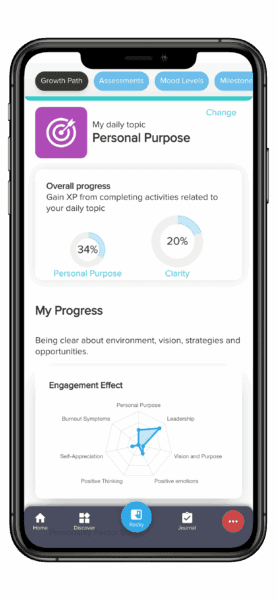
I downloaded the Rocky.ai business coaching app to see how it blends business coaching with artificial intelligence. It’s designed to provide daily micro-coaching sessions aimed at personal development and leadership growth.
Upon opening the business coaching app, I was greeted with a clean interface. The main feature is a daily chat that prompts self-reflection. Questions like “What did you achieve today?” or “How can you improve tomorrow?” encourage you to think critically about your actions and goals. These brief interactions are designed to take just a few minutes each day.
The app also offers goal tracking and habit-building tools. You can set personal development goals and monitor your progress over time. This feature is particularly useful for maintaining accountability and fostering consistent growth.
Rocky.ai supports multiple languages, making it accessible to a diverse user base. The AI-driven coach provides personalised development plans based on your responses, helping you to build skills like communication, resilience, and critical thinking.
I explored the free version, which includes daily coaching chats and basic goal-tracking features. There are premium plans available that offer more in-depth insights and personalised coaching programs.
User reviews are generally positive. One user mentioned, “Rocky’s daily questions help me keep focused and stick to good habits. So much was done, and my productivity has doubled.” Another noted, “Rocky makes it extremely easy to focus on continuous growth day after day. I start my day fresh and energised with the daily mindset routines.”
Overall, Rocky.ai offers a straightforward and accessible approach to daily coaching. It’s a valuable tool for individuals seeking to incorporate regular self-reflection and goal-setting into their routines. While it doesn’t replace human coaching, it serves as a supportive companion for personal and professional development.
Pricing and Rating
Rocky.ai has a free version that gives you daily AI coaching chats. If you want to unlock more features, like advanced insights, journaling, and progress tracking, there’s a premium plan that starts around €9/month.
-
App Store rating: 4.2 out of 5
- Google Play rating: 4.2 out of 5
It’s one of the most affordable coaching apps out there, and great if you want something light and fast. Some users mention the AI can repeat itself, but overall the reviews are solid for what it offers.
Drawbacks
-
Users have reported that the AI responses can be repetitive over time.
-
The user interface could benefit from enhancements to improve the user experience.
Which App Fits Your Team Best? A Quick Comparison
So, after trying each business coaching app, here’s how they stack up. BetterUp is the most full-featured, with real coaches, AI-powered tools, and a big focus on personal growth and mental fitness. It’s perfect for companies that want something polished and professional. CoachHub is great for larger teams that want to build coaching into the whole company. It comes with tracking tools for HR and an AI assistant to help people stay on track. Sounding Board is more about leadership development, especially for people managing teams. It’s focused, structured, and lets managers join in the process.
Marshall Goldsmith is the simplest of them all, but also the most reflective. It’s just you, a daily thought, and a few honest questions. No pressure. Just real self-growth, one day at a time. And then there’s Rocky.ai, a fully AI-powered tool for people who want short daily coaching moments without needing a human coach. It’s fast, habit-based, and great for keeping a steady growth mindset through short, text-based chats.
Each business coaching app has its own personality. Some are hands-on. Some are more reflective. Some cost more. Some are super simple. The right one depends on what your team needs and how they like to grow.
How Can Businesses Use Coaching Apps?

Business coaching apps aren’t magic. Just downloading them won’t fix your team’s problems. But if you use them the right way, they can change how people grow, lead, and work together. Below are simple ways businesses can make the most of coaching apps even if they’re just getting started.
Start Small, Then Grow
Don’t try to launch the business coaching app to your whole company on day one. That’s too much, too fast. Pick a small group to test it first. Maybe it’s your new managers. Or your sales team. Let them try the app for a few weeks. Then ask for honest feedback. What did they like? What did they use? What felt like a waste of time?
Starting small lets you fix problems early. It also helps you build trust. People will be more open to using something if they see others on the team using it first.
Get Leadership Involved
This is a big one. If team leads or senior managers aren’t using the business coaching app, no one else will take it seriously. Coaching should not be a “junior employee thing.” It works best when leaders model it.
If a manager shares a tip from the app during a meeting or says, “My coach helped me with this,” it sends a message. It shows that growth is normal. It shows that even leaders are still learning. That changes how people think about coaching from something you do when you’re struggling, to something you do to get better.
Make Time for It
Even the best business coaching app won’t work if no one has time to use it. Most people are busy. So don’t expect them to spend an hour a day on it. Instead, help them make small time blocks. Even 15 minutes once or twice a week can make a difference.
You can even build it into the schedule. For example, the first 10 minutes of your weekly team meeting could be a “coaching moment.” Share a quote from the Marshall Goldsmith app. Or ask a question from BetterUp’s reflection tools. This helps build a habit without adding extra work.
Use the Data to Spot Patterns
Business coaching apps like CoachHub and Sounding Board give managers and HR teams access to high-level trends. They don’t show private coaching details, but they do show patterns. For example, if lots of people are working on “difficult conversations” or “focus,” that’s helpful to know. It can guide your next training or even change how you support your team.
This kind of insight turns coaching from a personal tool into a team improvement tool. It helps businesses focus on what their people need, not just what sounds good on paper.
Pick the Right App for Your Culture
Not every team needs the same kind of business coaching. Some teams want deep, one-on-one sessions with a certified coach. Others just want short daily nudges. That’s why it’s important to choose the app that fits your company’s vibe.
- The Marshall Goldsmith business coaching app might be the right fit if your team is new to coaching or prefers quiet, personal reflection.
- If you want to offer professional coaching across your company, BetterUp or CoachHub might work better.
- If your team is going through a change or leadership shifts, Sounding Board could be helpful, especially with its manager integration.
- Rocky.ai is perfect for quick daily mindset shifts using AI.
The best business coaching app is the one your people will use and keep using.
Let People Choose Their Own Path
Don’t force one business coaching app on everyone. If you can, offer 2–3 options. Let people choose based on their style: introverts, extroverts, new managers, seasoned leaders. Even if the content overlaps, the experience matters. Autonomy increases usage.
Pair It With Real Conversations
Tech is great, but don’t let it replace the human touch. Once a month, ask team leads to have a short chat with each team member: “What have you been learning lately from your business coaching app?” Just that one question keeps it alive and connected to the real world.
Final Thoughts: Coaching That Works If You Use It Right
Business coaching used to be something only top executives got. It happened behind closed doors. It felt expensive, private, and out of reach. But that’s changed.
Now, with business coaching apps, it is easier to access than ever. It’s not just for the C-suite anymore. Anyone from new managers to future team leads can get smart, structured help to grow at work.
But here’s the truth: these apps only work if people use them. Not once. Not for a week. But again and again, until it becomes a habit. The best coaching doesn’t come from one brilliant session. It comes from small changes, made often.
That’s what these apps are trying to do. Some use AI. Some use real coaches. Some focus on daily tips. Others give you full programs. But they all ask the same question: how can we help people get better at their job, and enjoy it more?
For businesses, this isn’t just a “nice to have.” It’s a smart strategy. The companies that coach their people today are the ones who keep their talent tomorrow. They build teams that can grow, adapt, and lead without burning out.
So, if you’re running a business, leading a team, or just trying to build a better workplace … coaching might be the most powerful tool you’re not using enough. Coaching isn’t the future of leadership. It’s the present. And if you wait, your competitors won’t.
And now, it fits in your pocket.